
“We love the Wave-Up concept. Our guests can use the equipment entirely on their own, a real plus for the resort.”
Léa, manager, Camping Maïana Resort, La Grande-Motte
See the station at Camping Maïana ResortSelf-service surfboard rental
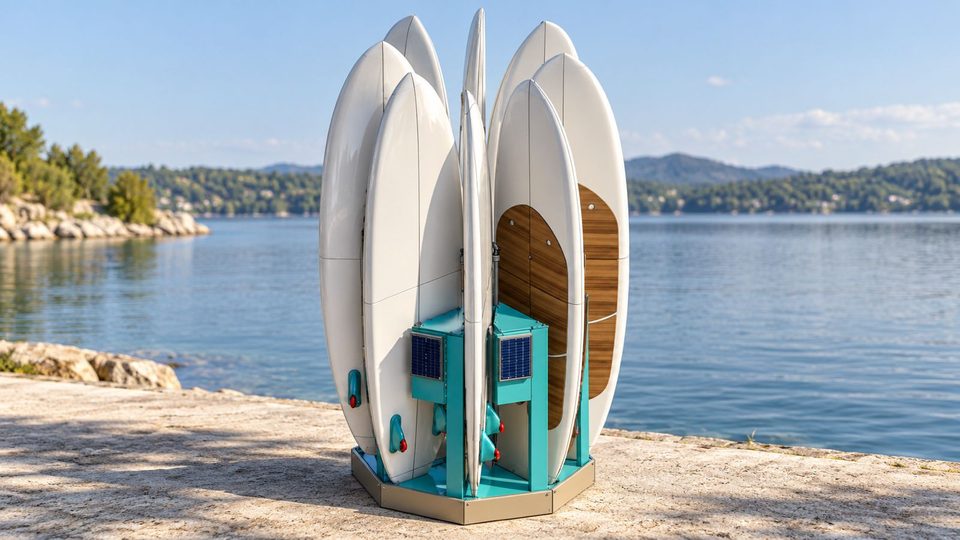
The Wave-Up station makes eight surfboards available as self-service at the water's edge. In front of the station, the surfer scans the QR code, books on their phone, opens their locker by code and returns the board to the same locker, without waiting for a counter to open.
The problem
A spot is not run like a beach. The session is decided the evening before, on a swell forecast and a tide coefficient, and the window sometimes lasts two hours. Meanwhile, a rental point opens at a fixed time, takes payment, has a waiver signed and takes the board back. Every missed window is a lost rental, and the surfer who has been let down twice comes back with their own board under their arm.
On top of this come the counter's fixed costs: a hut near the sand, a seasonal worker paid for opening hours and not for swell hours, an inspection at every return. Salt does the rest, and racks, padlocks and hinges left outside have to be replaced every spring. Finally, your best period does not necessarily fall within the beach season, that is, precisely when your team is largest.
The solution
The Wave-Up station is a self-service rental station built for the seaside. Powder-coated 316 stainless steel structure, the marine grade, and eight electric strikes that withstand salt spray. Eight slots take surf or stand up paddle boards: your foam boards for beginners, your narrower boards for regulars. Each slot has its closed locker for the leash, the life jacket or a waterproof pouch, and its paddle clip if you set up paddleboards. The whole fits in about 1.30 × 1.30 m of ground, or about 1.7 m², for 1.80 m high and about 180 kg empty. You can look at it from every angle on the 3D model.
Solar panels and 12 V 15 Ah battery as standard, about 3 W consumed, several days of autonomy without sun: there is no trench to dig up to the top of the beach, no connection. The surfer scans the QR code displayed on the station, opens the booking page in their browser, chooses 1 h, 2 h, 4 h or 8 h and pays by card. Their locker opens, the board comes out, the session happens, the board comes back in the same locker and the door closes. A 4G modem reports the state of the lockers, and you see remotely what has gone out and what has come back. Six campsites in the Hérault already operate a station.
The text that governs practice at sea is division 240, annexed to the order of 23 November 1987. Its article 240-1.02 lists “surfboards” among beach craft, with no condition on length or volume. A paddleboard, for its part, only falls in if its hull length is under 3.50 m, or if, beyond that, it does not meet the watertightness, stability and buoyancy conditions of article 245-4.03. Your stock of surfboards therefore falls under a single regime, where a stock of paddleboards can split in two.
This regime comes down to three sentences, in article 240-2.08: beach craft navigate in daylight only, their navigation is limited to a distance from a shelter not exceeding 300 metres, and they are not required to carry armament and safety equipment. The extension up to 2 miles exists, but it presupposes an activity organised by a State body or by a structure that is a member of an approved sports federation, qualified supervision present nearby on the water, and a 50 N individual buoyancy aid worn by each practitioner. A customer who rents a board and goes out alone does not benefit from it. The shelter, in this text, is not the shore: it is a place on the coast where the craft and its crew can take refuge and set off again without assistance.
Above this national text, there is the mayor's order. Article L2213-23 of the general code of local authorities entrusts them with policing swimming and water activities practised from the shore with beach craft and unregistered craft, up to a limit set at 300 metres from the water's edge. The same article asks them to delimit one or more supervised zones in the parts of the coastline offering sufficient guarantee for the safety of swimming, to determine the supervision periods, and to inform the public through appropriate publicity, at the town hall and where these activities take place.
This is where the sharing between swimmers and surfers is played out. The Mediterranean interregional directorate for the sea reminds that the marked zones of the 300 metre strip are either reserved exclusively for swimming and forbidden to all water sports, or forbidden to swimming and assigned to other activities, crossing channels included. It describes police buoyage in yellow special marks, spherical for zone limits, cylindrical or conical for channels, whose reference is the order of 27 March 1991. This buoyage results from a joint order of the town hall and the maritime prefecture, and any project located in the 300 metre strip is processed with the departmental directorate of territories and the sea.
Renting is not teaching. Article L212-1 of the sports code reserves to holders of a diploma, a professional title or a qualification certificate listed in the national directory of professional certifications the right to teach, lead, supervise a physical or sports activity or train its practitioners for payment. Equipment rental alone does not fall within this scope. If you also want to give lessons, that is another trade, covered on the locker for surf schools page.
Finally, the obligation to declare the operation of a physical and sports activity establishment was abolished by article 49, II, of the law of 20 December 2014 on the simplification of business life; article L322-2-1 of the sports code, created by law no. 2026-725 of 3 August 2026, restores the principle and refers its conditions to a Conseil d'État decree, to be followed. State services also remind that equipment renters do fall under this notion of establishment. The substantive obligations remain: article R322-4 of the sports code requires a first aid kit, a means of communication allowing rescue services to be alerted quickly and a rescue organisation chart displayed with useful addresses and numbers. At a spot, keep them within reach of the station rather than in a closed office. For the details of the navigation rules, read our page on paddleboarding regulations at sea.
Four points are settled before ordering, not after:
What it changes
Session at dawn or sunset: the board is available when the swell is, not when the team is.
Powder-coated 316 stainless steel, strikes resistant to sea mist, controller in a watertight box: the station is built to stay facing the sea, season after season.
The station replaces the rental hut. Booking, payment and access happen without you; your teams have no schedule or till to run.
Economics and installation
Station delivered as a kit, on quote; the offer and the volume discounts are detailed on the Pricing page. You place your own surfboards in the station; the configuration, surf or stand up paddle, is defined in the quote.
The station is manufactured in France by our partner, and has a 2 year warranty on parts and labour. Installation at your site is specified in the quote. The revenue potential depends on the beach's footfall, your prices and the season; the simulator gives you an order of magnitude, and the team replies within 24 business hours to any quote request.
A wave spot and a paddle beach do not fill up at the same times. Paddleboards are rented on flat sea, in high summer, in the middle of the day. Surfing is rented in windows, when the swell comes in, and these windows do not consult the school holiday calendar. This is the first reason why a counter run during opening hours misses part of the demand.
The law says so in its own way. The same article L2213-23 specifies that, outside the supervised zones and the supervision periods set by the mayor, swimming and water activities are practised at the risk of those concerned. Your best swell period therefore often falls outside the supervised period. This is not a ban, it is information to display and a decision to make on the access conditions to your station.
Before choosing the location, read the waves rather than memories. The Candhis network, the national coastal observatory for in situ measurement of sea states, is managed by Cerema and publishes the readings of its buoys in real time and in archive, station by station: Cap Ferret, Espiguette, Île de Batz, Alistro, La Revellata, plateau du Four. These series give, month by month, the real profile of the body of water closest to your site. A month without waves will not produce rentals, whatever equipment is installed.
For operations, this changes two things. First, durations: a 1 h or 2 h slot fits a session, and the 4 h and 8 h formats remain for flat days and families. Second, workload: off season, nobody waits behind a till, and you decide whether the station opens. Access conditions remain those of your establishment. To put figures on your own season, use the simulator, the pricing page and the quote request.
They installed it
“We love the Wave-Up concept. Our guests can use the equipment entirely on their own, a real plus for the resort.”
Léa, manager, Camping Maïana Resort, La Grande-Motte
See the station at Camping Maïana Resort
“A top-quality installation and zero management on our side. Our guests book their equipment in two clicks, it's great.”
Camille, manager, Camping Palmira Beach, Vendres
See the station at Camping Palmira Beach
“A modern service that people really like. The paddleboards are gone first thing in the morning, we want more.”
Julie, manager, Camping Roucan Plage, Vias
See the station at Camping Roucan Plage
“Our guests love it. The Wave-Up locker has transformed access to watersports on our beach. A real plus for the campsite.”
Savinka, manager, Camping Nouvelle Floride, Marseillan-Plage
See the station at Camping Nouvelle Floride
Camping Méditerranée Beach Garden, Marseillan-Plage
See the station at Camping Méditerranée Beach Garden
Camping La Tamarissière, Agde
See the station at Camping La TamarissièreFrequently asked questions
The station has eight slots for boards, eight lockers and eight paddle clips. The slots take surf or stand up paddle, and you install your own boards in them: foam boards for beginners, narrower boards for regulars, depending on what your spot requires. Dimensions are checked in the quote, before ordering. The kayak is not in the standard catalogue: it is studied according to configuration, on quote.
No. Article L212-1 of the sports code covers teaching, leading, supervising and training for payment, and reserves these functions to holders of a diploma or a title listed in the national directory of professional certifications. Renting out equipment, without lessons or accompaniment, does not fall within this scope. However, article R322-4 of the same code requires a first aid kit, a means of quickly alerting rescue services and a displayed rescue organisation chart.
Division 240 lists surfboards among beach craft. Its article 240-2.08 limits their navigation to a distance from a shelter not exceeding 300 metres and restricts it to daytime. The extension up to 2 miles presupposes an activity organised by a State body or a structure that is a member of an approved sports federation, with qualified supervision nearby on the water, which is not the case for a free rental. Display the rule on the station, next to the municipal order in force.
According to the Mediterranean interregional directorate for the sea, the marked zones of the 300 metre strip are either reserved exclusively for swimming and forbidden to all water sports, or forbidden to swimming and assigned to other uses, crossing channels included. The buoyage results from a joint order of the town hall and the maritime prefecture, on the reference of the order of 27 March 1991. So spot where your customers will reach the open water, and place the station on that side. A creation or modification of buoyage is processed with the departmental directorate of territories and the sea.
Within the access conditions of your establishment, yes: they do not wait for a counter to open. They scan the QR code displayed on the station, book from their browser for 1 h, 2 h, 4 h or 8 h, pay by card and open their locker. The navigation of beach craft remains exclusively daytime, article 240-2.08 says so, and it is therefore daylight that limits practice, not your organisation.
Through its material and components: powder-coated 316 stainless steel, the marine grade, and eight electric strikes resistant to salt spray. It is designed and manufactured in France by our industrial partner, and has a 2 year warranty on parts and labour, excluding vandalism. Allow for about 180 kg empty, 1.80 m high and about 1.7 m² of ground: it can be placed as close to the sand as possible.
You do. Boards, paddles and accessories belong to the operator: the station stores them and makes them accessible, it does not supply them. Each slot has its closed locker for a leash, a life jacket or a waterproof pouch, a wetsuit being managed separately. The station opens and closes a locker, it does not replace your daily check of the equipment.
Yes. A school that wants to put its boards to work between two lessons will find the details on the locker for surf schools page, and the basics of the subject are covered in our guide to getting started with surfing in France. A concession, a coastal campsite or a municipal seafront also suit, provided the location is authorised by the landowner and compatible with the municipal order. These authorisations remain your responsibility and are prepared before ordering.
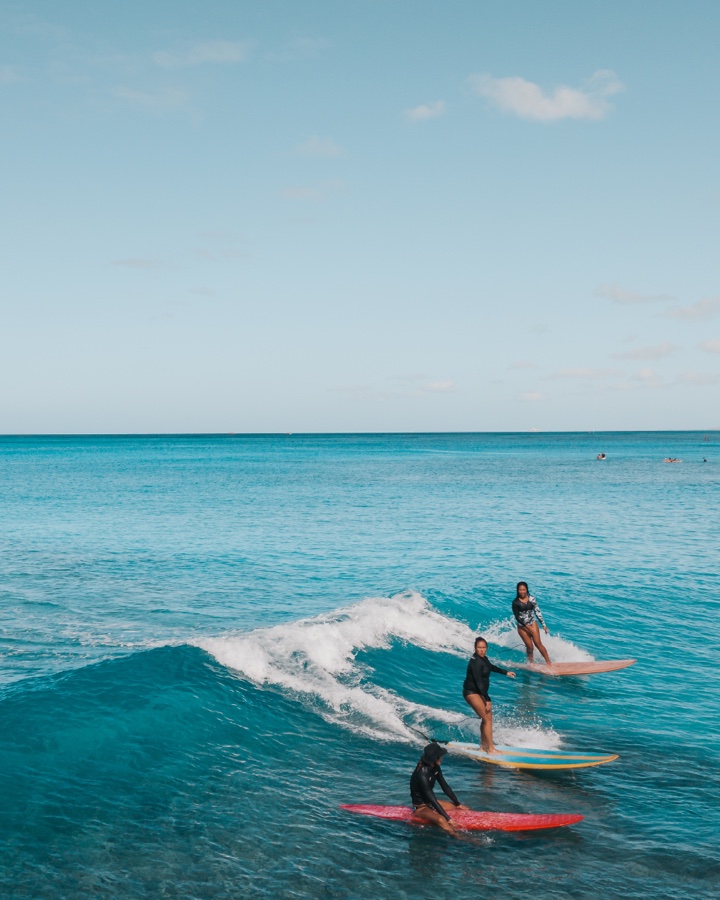
Why the Mediterranean swell is irregular, when the waves come, where to surf in the Hérault and which priority and safety rules…
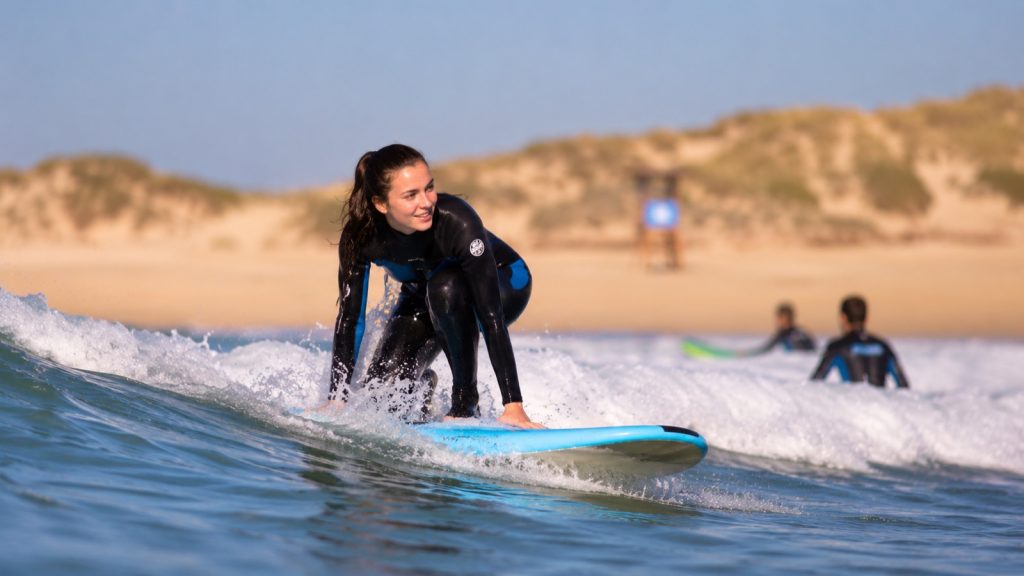
Where to learn, which board to choose, how to read the ocean and respect the line-up: the guide to your first surf in France, from foam…
Coast bulletin, mean wind and gusts, Beaufort, swell, storms, warnings: reading Météo-France's marine weather before a paddleboarding outing,…
The beach name, your season, your number of boards: three lines are enough to request a free, no-obligation quote. Reply within 24 business hours.
