
“We love the Wave-Up concept. Our guests can use the equipment entirely on their own, a real plus for the resort.”
Léa, manager, Camping Maïana Resort, La Grande-Motte
See the station at Camping Maïana ResortLeisure parks and water sports centres
Weekends, school holidays, heatwaves: demand arrives all at once. The Wave-Up station puts eight boards on self-service at the water’s edge, even on a bank with no electricity.
The problem
A leisure park does not run at a steady pace, it runs in bursts. A Sunday in June, a long weekend in May, a week of intense heat: the queue grows outside the rental counter, and for the rest of the year the building stays shut. Run in-house, opening that counter means a seasonal post to fund for the whole period, a till to manage and a staff member tied to the desk at the very hours when your resources are already stretched by bathing supervision.
Then there is geography. The busiest bank is rarely the best served: running a power line to the water, building a hut and locking it every evening, the idea stops at the first costing. And when a school group or a youth centre turns up, that is yet another staff member to free up, whereas simple rental, with no instruction, requires neither a qualification nor anyone at the counter.
The solution
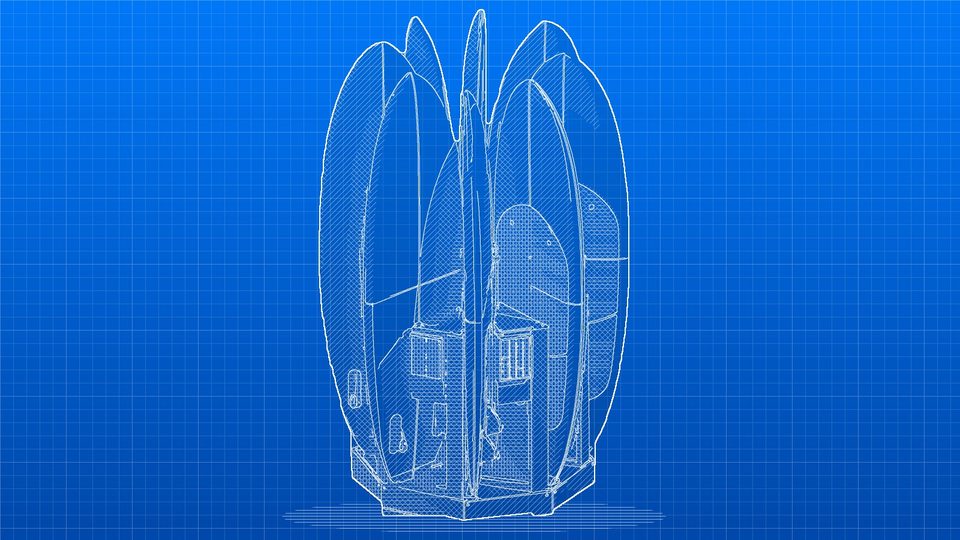
The Wave-Up station is a self-service rental locker built to stand on a bank that the electricity grid does not reach. Solar panels and a 12 V 15 Ah battery are built in as standard: it draws about 3 W and keeps running for several days without sun, with no mains connection at all. No trench to dig, no meter to set up. A built-in 4G modem reports the state of the lockers; it therefore needs mobile coverage at the exact spot where you place it, and that is the only network constraint to check before choosing the location.
It holds eight stand up paddle or surf boards, with eight lockers for the life jacket, the leash and the waterproof pouch, and eight clips for the paddles. Allow about 1.30 × 1.30 m of ground space (about 1.7 m²), 1.80 m in height excluding boards and about 180 kg empty: the powder-coated 316 stainless steel and the eight electric strike locks are built to stay outdoors, at the water’s edge. The user scans the QR code displayed on the station, books 1 h, 2 h, 4 h or 8 h from a smartphone, pays by card and opens the locker. The board goes back in its slot on return, the door closes again, and no staff member has left their post. You can walk around the station in the 3D model.
What it changes
Eight boards are rented in parallel, with no queue at the counter and no seasonal worker to find for a few weekends.
Remote bank, peninsula, lake in the middle of nature. Solar panels, battery and 4G modem are built in: all it needs is mobile coverage.
One station at the lake beach, another at the start of the walks: from 2 stations, the volume discount applies.
The question comes up on every project: do you need an instructor to rent out a board? No. Article L212-1 of the French Sports Code (code du sport) reserves the right to teach, lead or supervise a physical or sporting activity, or to coach those who practise it, for payment, to holders of a diploma, a professional qualification or a certificate of qualification listed in the national register of professional certifications. Handing equipment to a user who sets off alone falls under none of these verbs. Add a paid introductory session or a guided outing, even one run by a member of the park’s staff, and the qualification becomes compulsory again.
Renting does not, however, take you out of the law on physical and sports activity establishments, and your park is one: article L322-1 of the Sports Code covers any establishment in which physical or sporting activities are practised. Article L322-2 requires these establishments to meet hygiene and safety guarantees set by regulation, and article R322-4 spells them out: a first aid kit, a means of communication to alert the emergency services quickly, and a displayed emergency organisation chart, with the addresses and numbers of the people and bodies likely to intervene. Article L321-7 makes operation conditional on taking out an insurance contract covering your liability, that of the instructors referred to in article L212-1, that of your employees and that of the users admitted to the establishment.
The registration of the establishment, for its part, is being reworked, and many online guides still describe the old rule. Article R322-1 of the Sports Code required a declaration to the prefect of the département at least two months before opening: it was repealed on 11 March 2016 by decree no. 2016-281 of 8 March 2016, after its legal basis, the former article L322-3, was repealed by law no. 2014-1545 of 20 December 2014 (an article L322-3 exists again since 2024, but it deals with bans on practising). Law no. 2026-725 of 3 August 2026 created article L322-2-1, in force since 5 August 2026, which leaves it to a decree of the Conseil d’État to set the conditions under which the managers of establishments declare their activity to the administrative authority. Until that decree is published, call your departmental youth, engagement and sports service before opening the service: it will tell you what it expects. One obligation, however, has never changed: article R322-6 of the Sports Code requires you to inform the prefect of any serious accident and of any situation that has posed serious risks to users.
Two points apply to a body of water. First, stand up paddle is expressly excluded from the scope of article A322-42 of the Sports Code, which covers establishments organising canoeing, kayaking, rafting, white-water swimming and any other craft propelled by a paddle: the technical rules of that subsection do not apply to a paddleboard station, but they come back into play if you add kayaks to your offer. Second, renting is not supervising. Article L322-7 of the Sports Code requires every paid-access bathing area to be supervised continuously, during public opening hours, by qualified staff holding a state-issued diploma. A rental station changes neither your bathing area nor your supervision and rescue organisation plan. If your park is on the coast, article L2213-23 of the General Local Authorities Code gives the mayor the policing of bathing and of water activities practised from the shore with beach craft and unregistered craft, up to 300 metres from the water’s edge.
When the users are minors taken in at a youth centre or on a holiday camp, a second set of rules applies. Article R227-13 of the Social Action and Families Code provides that physical activities are to be supervised by adults meeting one of the conditions it lists, and refers to a joint order for activities involving particular risks. The stand up paddle sheet from the ministry in charge of sport relays that order of 25 April 2012: the number of participants per supervisor is limited to eight, and the activity is subject to passing a preliminary test, taken without a buoyancy aid. With eight slots, one station equips seven participants and their supervisor, or eight participants if the supervisor brings their own board.
Economics and installation
Station delivered as a kit, price on quote. Volume discount, from −5% at 2 stations to −25% at 20 stations. Manufacturer’s warranty of 2 years on parts and labour, excluding vandalism.
The station is bought by the operator, who sets the prices. Wave-Up then takes care of booking, payment and after-sales service. Revenue potential depends on the park’s visitor numbers, the prices charged and seasonality; the simulator gives an estimate with a displayed prudence factor of 25%. Wave-Up installs the station and answers any quote request within 24 working hours, free of charge and with no commitment.
The way your park is managed determines what follows. In-house (en régie), the local authority runs the service itself: article L1412-1 of the General Local Authorities Code provides for setting up a régie for the direct operation of an industrial and commercial public service within its remit, after the opinion of the consultative commission on local public services where one exists. A rental service charged to the user is likely to fall into this category, but the classification applying to your park should be checked with your public accountant before any council vote. Under a concession, the question becomes: who, you or the concession holder, buys the station, writes it off and takes it back at the end of the contract. With an association, it is the occupancy agreement signed with the owner of the water body that says what you may place on the bank.
In-house, two articles change the way you think. Article L2224-1 of the same code requires that the budgets of industrial and commercial public services run in-house, leased out or conceded by municipalities be balanced in revenue and expenditure. Article L2224-2 in principle prohibits the municipality from covering these costs from its own budget, except by a reasoned council decision falling under the cases it lists, and this cover cannot amount to simply making up an operating deficit. In plain terms for your project: rental revenue must stand on its own against the cost of the service. The hourly rate you vote on and the occupancy rate you aim for therefore weigh more heavily than the investment line.
Wave-Up does not settle this debate for you. The operator buys the station, remains its owner and sets its prices: the régie, the concession holder or the association, depending on your set-up. Wave-Up then provides the booking and payment web app, manages the rentals and service to users; maintenance of the station is not included. The offer is detailed on the pricing page. To weigh up régie against concession before deciding, read leisure park: régie or concession, then work out your season in the simulator and request a quote.
They installed it
“We love the Wave-Up concept. Our guests can use the equipment entirely on their own, a real plus for the resort.”
Léa, manager, Camping Maïana Resort, La Grande-Motte
See the station at Camping Maïana Resort
“A top-quality installation and zero management on our side. Our guests book their equipment in two clicks, it's great.”
Camille, manager, Camping Palmira Beach, Vendres
See the station at Camping Palmira Beach
“A modern service that people really like. The paddleboards are gone first thing in the morning, we want more.”
Julie, manager, Camping Roucan Plage, Vias
See the station at Camping Roucan Plage
“Our guests love it. The Wave-Up locker has transformed access to watersports on our beach. A real plus for the campsite.”
Savinka, manager, Camping Nouvelle Floride, Marseillan-Plage
See the station at Camping Nouvelle Floride
Camping Méditerranée Beach Garden, Marseillan-Plage
See the station at Camping Méditerranée Beach Garden
Camping La Tamarissière, Agde
See the station at Camping La TamarissièreFrequently asked questions
Yes. The solar panels and the 12 V 15 Ah battery are built in as standard, power draw is about 3 W and the station keeps running for several days without sun. There is no trench to dig and no meter to set up. The only network constraint is mobile coverage: the built-in 4G modem must pick up a signal at the exact spot where you place the station.
No, not for simple rental. Article L212-1 of the Sports Code requires a diploma, a professional qualification or a certificate of qualification listed in the national register of professional certifications in order to teach, lead or supervise a physical or sporting activity for payment. Handing a board to a user who sets off alone falls under none of these cases. As soon as you offer an introductory session or a paid guided outing, the qualification becomes compulsory again, even for a member of the park’s staff.
The rule is being overhauled. The old declaration to the prefect, at least two months before opening, was based on article R322-1 of the Sports Code, repealed on 11 March 2016 by decree no. 2016-281 of 8 March 2016. Article L322-2-1, created by law no. 2026-725 of 3 August 2026, now leaves it to a decree of the Conseil d’État to set the declaration conditions: until it is published, ask your departmental youth, engagement and sports service. The other obligations already apply: insurance under article L321-7, rescue equipment under article R322-4, informing the prefect of a serious accident under article R322-6.
The operator, whoever it is: the régie, the concession holder or the association owns it and sets its prices. Wave-Up then takes care of booking, payment and after-sales service. In a régie, article L2224-1 of the General Local Authorities Code requires the service budget to be balanced in revenue and expenditure, and permits to occupy the site remain your responsibility. If it is the municipality carrying the project on a municipal beach or body of water, also see equipping a municipal beach.
Yes, provided you follow the rules specific to group activities for minors. Article R227-13 of the Social Action and Families Code sets out who may supervise physical activities and refers to a joint order for activities involving particular risks; the stand up paddle sheet from the ministry in charge of sport relays the order of 25 April 2012, which limits participants to eight per supervisor and makes the activity subject to a preliminary test taken without a buoyancy aid. One station therefore covers a whole group, supervisor included if their board comes from the same locker. Supervision is the responsibility of the organiser of the activity; if you provide it for payment, article L212-1 of the Sports Code applies to your staff member. To fill your programme around the water, see things to do by a lake.
No. Article L322-7 of the Sports Code requires every paid-access bathing area to be supervised continuously, during public opening hours, by qualified staff holding a state-issued diploma. Equipment rental is a separate activity: it does not create a bathing area and does not change your supervision and rescue organisation plan. Place the station away from your lifeguards’ routes and display the navigation rules for your body of water next to it.
The station takes eight stand up paddle or surf boards, with eight lockers for the life jacket, the leash and the waterproof pouch and eight clips for the paddles. Kayaks do not fit in the station, which is sized for boards: they are assessed case by case, on quote. Describe your current fleet in your request and the reply will say what is possible at your site. Note that by adding kayaks you come within the scope of article A322-42 of the Sports Code, from which stand up paddle is expressly excluded.
Maintenance remains the operator’s responsibility. The manufacturer’s warranty is 2 years, parts and labour, excluding vandalism; the station is designed and made in France by the industrial partner, in powder-coated 316 stainless steel, with eight electric strike locks that withstand sea mist. The 4G modem lets you monitor the state of the lockers remotely, without going down to the bank. Other sites already operate a station: see our references.
Yes: Wave-Up provides the booking and payment web app, manages the rentals and service to visitors and handles after-sales service. The park operator, whether a local authority or a concession holder, buys the station, owns it and sets its prices; maintenance of the station is not included.
In-house management, public service delegation, contract or occupation agreement: what each set-up requires of a municipality for its water activities,…

A countdown in five dated steps, from D-90 to D-1, to open your beach or leisure park without…

From October to April, your water sports base changes pace, not purpose. The operator’s plan, month by month, to prepare…
Request a quote for your leisure park: free, no commitment, reply within 24 working hours.
