
Operator advice
Leisure equipment at the campsite: depreciation and profitability
Before investing in leisure equipment: expense or fixed asset, straight-line depreciation, period, VAT, then payback time and return on…
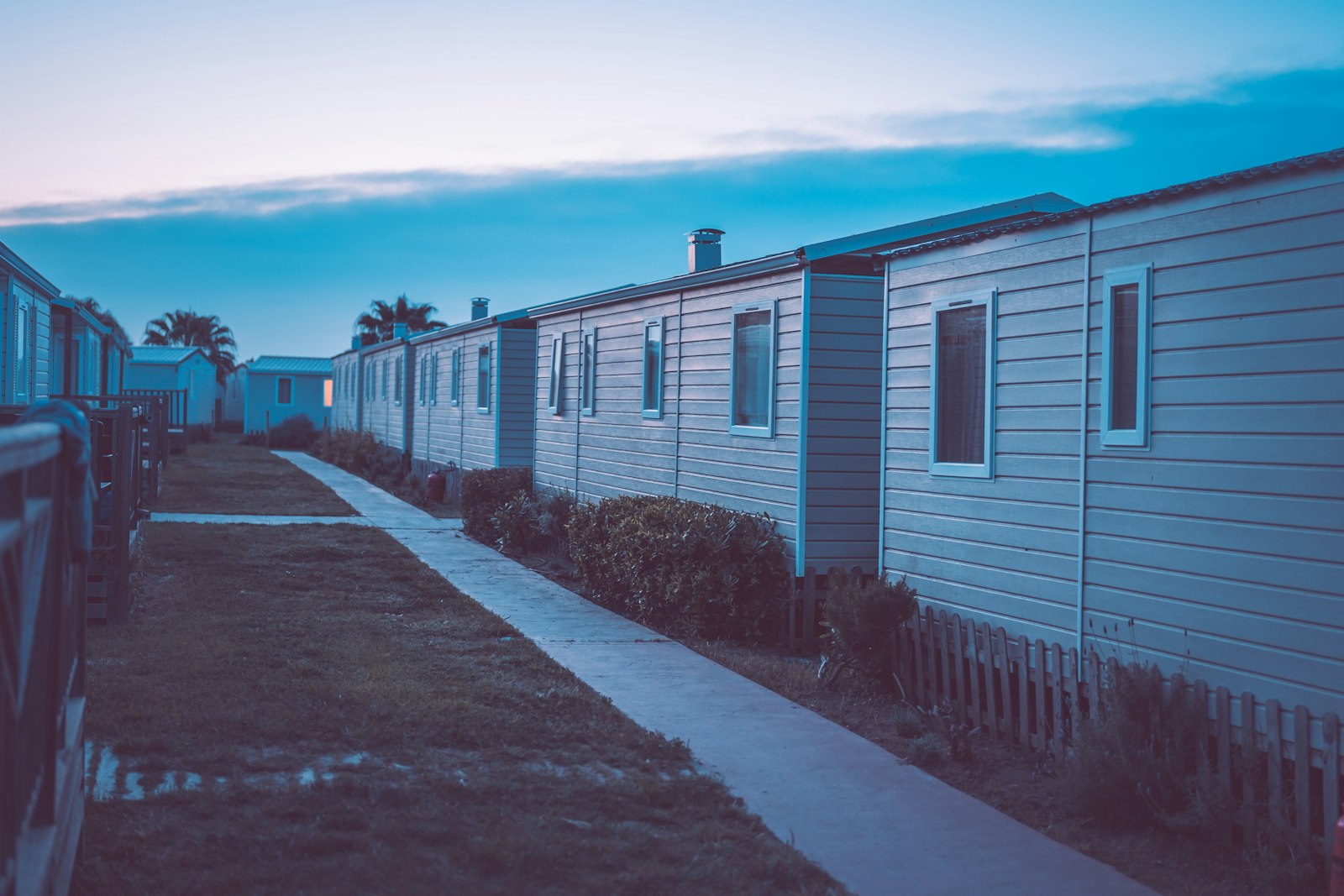
Yes, on average a campsite is profitable: in 2023, the 5,016 businesses in the sector recorded by Insee generated a gross operating surplus of €889 million on €4.26 billion in revenue, or about 21%, by our calculation. Yet a campsite's profitability rests on four levers you only partly control: occupancy rate, average price, ancillary revenue and heavy costs, investment above all.
Each year Insee publishes the aggregated accounts of businesses whose main activity is camping. Here are the 2022 and 2023 vintages.
| Indicator | 2022 | 2023 | Share of revenue in 2023 |
|---|---|---|---|
| Revenue excluding tax | €3,902M | €4,265M | 100 % |
| Value added | €1,847M | €1,975M | 46 % |
| Staff costs | €913M | €1,005M | 24 % |
| Gross operating surplus | €866M | €889M | 21 % |
| Current profit before tax | €520M | €431M | 10 % |
| Tangible investment | €975M | €971M | 23 % |
Source: Insee, Ésane 2022 and 2023, subclass 55.30Z (campsites and parks for caravans or leisure vehicles). Shares are our calculation.
Three readings. Campsite gross surplus is comfortable: in the same source, that of hotels is close to 14% of their revenue, by our calculation. Growth does not turn into profit on its own: in 2023, revenue rises 9% while current profit before tax falls from €520 million to €431 million. Finally, these are averages, which mix the small family site and the group with several sites.
An empty pitch on a July evening can never be made up. From April to September 2025, Insee measures an occupancy rate of 43.5% in campsites in mainland France, ranging from single to double depending on the classification.
| Rating | Establishments | Occupancy rate |
|---|---|---|
| Unclassified | 1 604 | 29,7 % |
| 1 star | 255 | 27,1 % |
| 2 stars | 1 067 | 36,4 % |
| 3 stars | 2 226 | 39,3 % |
| 4 stars | 1 260 | 49,4 % |
| 5 stars | 267 | 57,9 % |
| All | 6 678 | 43,5 % |
Source: Insee, campsite attendance from April to September 2025.
Classification goes with occupancy. Stars do not fill a site on their own, but they signal the facilities and services that families come looking for. This classification is voluntary, is requested on the Atout France website and is valid for five years, the Directorate General for Enterprise reminds us. And even at 5 stars, more than four pitches in ten stay empty on average over the season: that is the room for improvement of the whole sector.
The occupancy rate says nothing about what each night brings in. Yet, in its review of the 2025 season, the Fédération nationale de l'hôtellerie de plein air (FNHPA) notes sharper budget trade-offs among holidaymakers, with a direct effect on the average basket. Bare pitches, cheaper than equipped ones, are back in force: 52.7 million overnight stays from May to August 2025, up 4.8%, against 72.2 million and a 2.1% rise for equipped pitches.
This return supports volumes, the federation notes, but weighs on average revenue per stay, to the point of straining the profitability of some establishments. Filling up is therefore not enough: see our analysis on how to increase a campsite's average basket, item by item.
A campsite sells mostly in summer but pays all year round. In 2023, according to Insee, the sector employs an average of 24,392 employees over the year, but only 13,033 on 31 December: a little over half. Every spring, recruiting and training seasonal staff starts again. Staff costs weigh 24% of revenue.
The second burden is investment: €971 million in 2023, more than the year's gross operating surplus. Accommodation to renew, facilities to modernise, compliance work: a good part of the margin goes back into the site. Climate adds a line to the budget. According to the FNHPA, nearly 2,000 campsites are in a risk zone (flooding, marine submersion, fire, coastal erosion) and account for half of national attendance.
No single lever works miracles on its own. Yet four avenues follow directly from the figures above.
That last lever can also delight your customers. Picture a July morning: a family walks down to the water, scans the QR code displayed on the station, books and pays from a smartphone, then picks up stand up paddle boards, paddles and life jackets. Nobody at reception has left their post. On the way back, everything returns to its place in the same locker, and the family goes home with the memory of their day.
That is the principle of Wave-Up's self-service paddle station for campsites: 8 board slots, solar power, no electrical connection. The station is purchased, price on quote; Wave-Up then provides the booking and payment app, manages the rentals and the service to holidaymakers and handles after-sales support, with maintenance of the station remaining at your expense. You own it and set your own prices. Six campsites in the Hérault are already equipped with one. The simulator shows its assumptions and gives an estimate, not a promise.
For other concrete ideas, see our seven ideas to make a campsite profitable.
On average, yes. In 2023, the sector's gross operating surplus represents about 21% of its revenue and current profit before tax about 10%, by our calculation from Insee data. These averages hide large gaps in occupancy, price and investment.
From April to September 2025, it reaches 43.5% in mainland France according to Insee: 27.1% for 1 star, 57.9% for 5 star. Equipped pitches fill better than bare ones, at 51.6% against 37.3%.
We found no public statistics specific to campsite owners: their pay depends on status, debt, any rent and what is reinvested. The only honest benchmark remains your own gross operating surplus, after deducting loan repayments and the renewal of accommodation.
Start from gross operating surplus: revenue, minus purchases and external costs, staff costs and operating taxes. Express it as a share of revenue and compare it with the sector's 21% in 2023. Also track your revenue per pitch.
It all depends on the price paid relative to the gross surplus the site actually generates. Before signing, ask for the accounts for several years, the state of the accommodation to be renewed, the date of the classification and the site's exposure to natural risks: nearly 2,000 campsites are in a risk zone according to the FNHPA.
Relative to revenue, campsite gross surplus exceeds that of hotels on average. But the price of each night, what your customers spend during the stay and the weight of your team make the difference between a good summer and a good year. If a water activity that runs without dedicated staff has a place in your plan, request a quote: it is free, and the reply arrives within 24 working hours.

Before investing in leisure equipment: expense or fixed asset, straight-line depreciation, period, VAT, then payback time and return on…
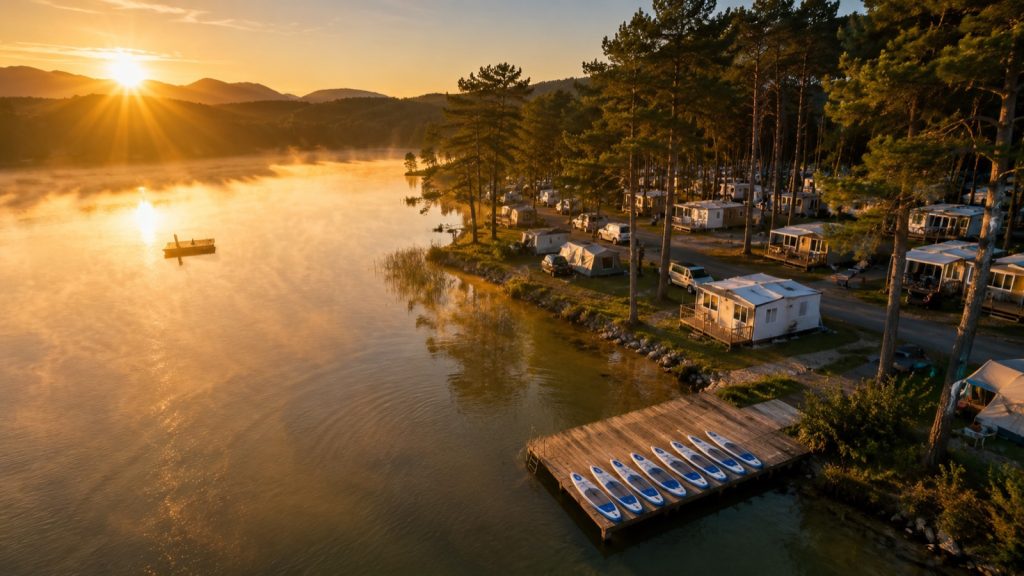
Short season, long overheads: seven practical ways to raise a campsite’s income, without building anything or hiring a team.
Opening a campsite, from the land to opening day: planning permit thresholds, farm camping and agricultural land, star rating,…
Estimate the revenue of a self-service rental station on your site, then request your free quote.
