Product & behind the scenes
316 stainless steel by the sea: what powder coating changes
Molybdenum, corrosivity categories, surface preparation, labels: the reading grid to check what a supplier really puts behind the…
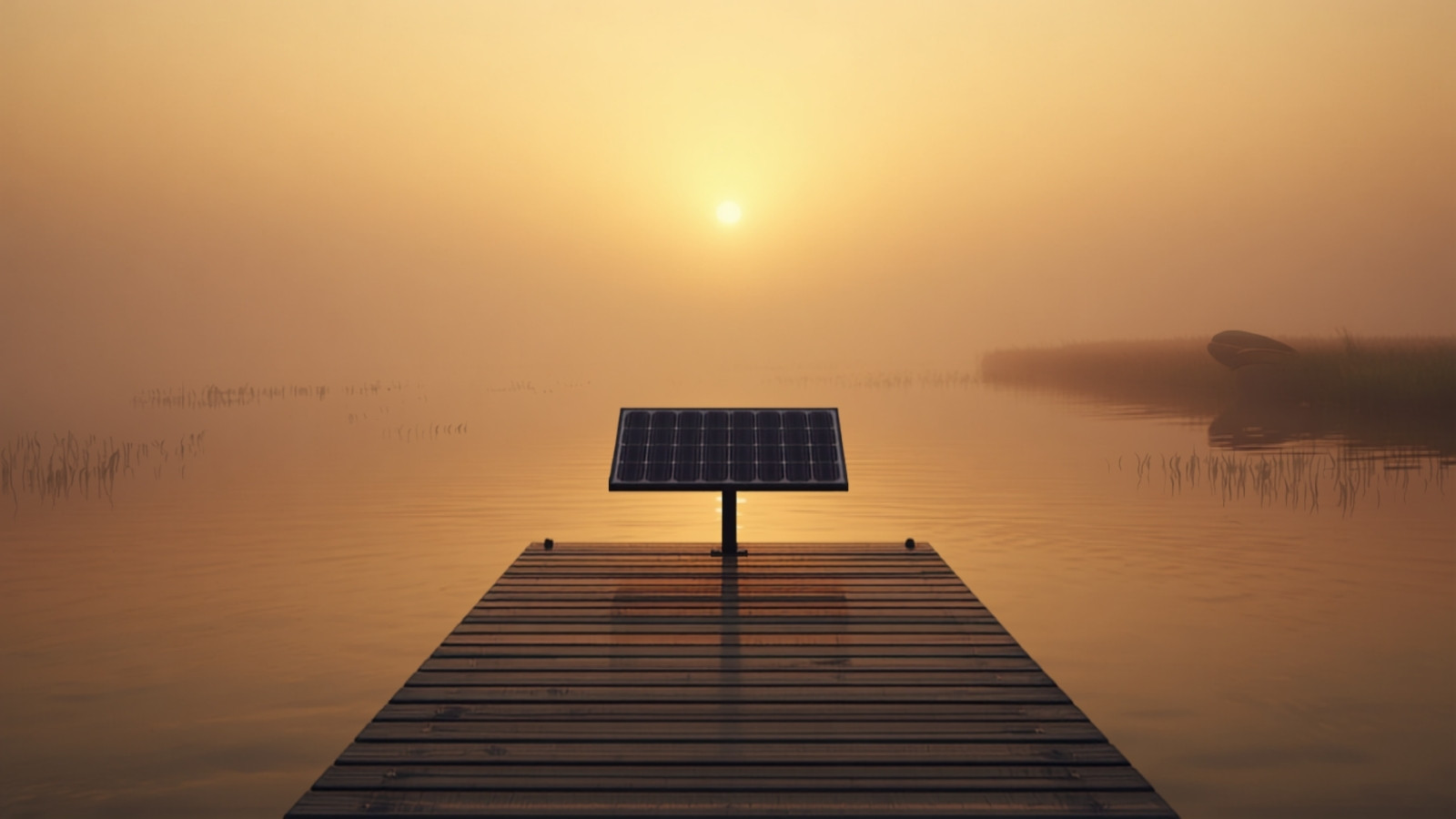
Late afternoon on a lakeside bank. The last paddleboards come in, the sun slips behind the tree line and, on the pontoon, a lamp switches on by itself. No electricity pole on the horizon, no cable under the planks: the power it runs on fell from the sky during the day, then waited in a discreet battery.
This scene has a slightly technical name, solar power in remote sites, and a very concrete reality: the outdoors is getting electrified without being connected. Mountain huts, buoys, pontoons, beach showers, rental stations: a tour of what solar has changed at the water’s edge, how it really works, its acknowledged limits and what it makes possible for the landscape.
The most beautiful spots are often the least connected. The electrical grid stops where the landscape begins: at the end of the car park, behind the last mobile home, before the dune. A campsite powers its pitches, and nothing on its beach. A leisure park lights its reception, not its pontoon. A municipality maintains its seafront without a single socket reaching it.
For a long time, the answer was binary: dig a trench to the shore, or give up. Yet the trench means a building site: machinery on a fragile bank, a buried cable for sometimes tiny needs (switching on a lamp, opening a lock, powering a sensor). The result: projects shelved in boxes. The shoreline remained a territory without electrons, even as uses there multiplied.
Quietly, panel after panel, the outdoors has learned to do without the grid. Mountain huts led the way: far from any line, they entrust their lighting and essential uses to the sun, with batteries to last the night and, sometimes, a turbine as backup. The waterfront followed. Connected buoys measure water temperature or quality and transmit their readings with only their onboard panel. Pontoons light up at dusk with energy captured in the afternoon. Information or emergency call points watch over beaches the grid does not reach. Solar beach showers do even better: they need no electricity at all, the sun heats the water directly.
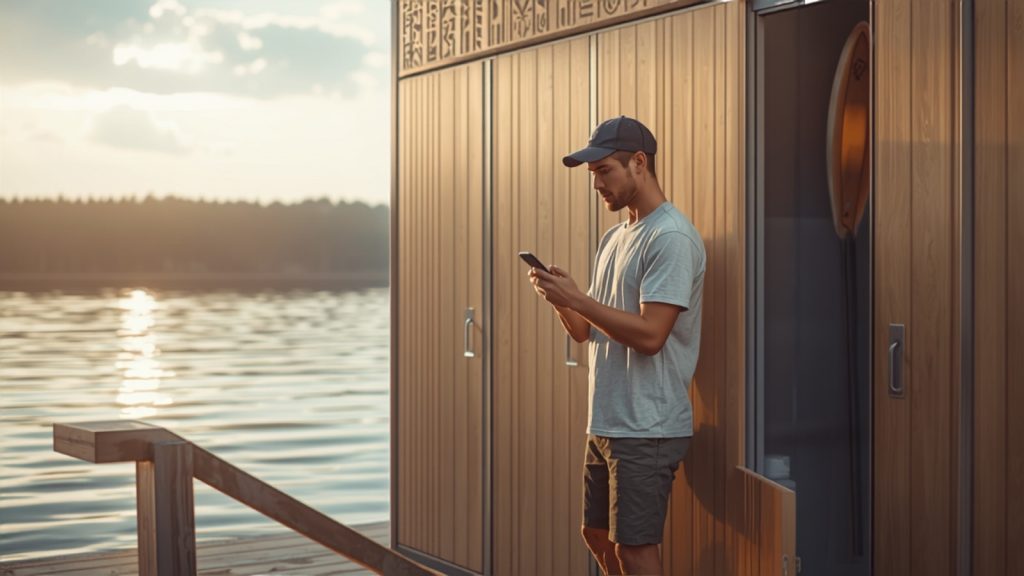
Equipment rental has joined the movement. Self-service locker stations, such as the Wave-Up self-service SUP stations, include solar panels and a battery as standard that remove the need for a connection: zero trenches, zero hook-ups, the station goes where the users are rather than where the socket is. In front of the station, a QR code opens the booking page in the smartphone’s browser, with no app to install: you pay by card, you receive a code, the locker opens, on the time slots opened by the operator. On the station side, everything runs on the energy captured by the panels and stored in the battery.
A stand-alone installation rests on three building blocks. The panel turns light into current. The battery sets that current aside for the night and the grey days. Between the two, regulation electronics keep watch: they protect the battery and cut whatever is not essential.
The point often misunderstood: in remote sites, frugality in use matters more than installed power. The question is never “how much does this panel produce?” but “what does this equipment really need?”. An electronic lock consumes almost nothing on standby: most of its energy is spent at the precise moment of unlocking. A screen switches off between two visitors. A sensor sleeps between two measurements. This frugality, far more than the size of the panel, makes autonomy possible over time.
In remote sites, the luxury is not power: it is needing no one.
| Outdoor use | Power need | Why solar is enough |
|---|---|---|
| Pontoon lighting | LEDs lit at nightfall | Modest consumption, recharged by day |
| Beach shower | None: the water is heated directly | The sun’s radiation heats the water circuit without electricity |
| Measurement buoy | Sensors and intermittent transmission | The electronics stay on standby between readings |
| Information or emergency point | A screen or a call, occasionally | Rarely used, on standby the rest of the time |
| Self-service rental station | Unlocking lockers, managing bookings | Most of the consumption happens at the moment of opening |
Solar power in remote sites has its blind spots, and it is better to know them beforehand than afterwards. First limit: shade. A panel under the pines of a campsite or at the foot of a cliff produces poorly, whatever its quality. The placement is studied, sometimes to within a few metres.
Second limit: winter. Short days, low sun, overcast skies: output weakens just when you would like it to hold up. For a seasonal use such as water sports rental, that suits: demand follows the sun. For equipment that must live year-round, the sizing of the battery becomes decisive.
Third limit, precisely: sizing. A stand-alone installation is calculated from actual use, region and orientation, not by guesswork. Too tight, it gives out at the worst moment; oversized, it costs for nothing. Entrust this calculation to a serious installer or manufacturer: a box ticked on an order form is not enough.
One argument remains that is cited too little: what stand-alone solar spares the landscape. No overhead line scarring the horizon, no gash cut into a bank, no heavy building site on land that did not ask for so much. Equipment simply placed or weighted down is removed as it arrived, and the shoreline keeps practically no trace of it.
For sensitive banks or protected sites, this lightness changes the discussion, even if any permits remain your responsibility. It also changes the equation for landowners: a waterside plot, long judged unusable for lack of a grid, can now host an activity without major works. This is one of the promises of our article on the water sports centre of the future: energy autonomy was sketched there, and it is already happening today.
A remote site is a place not connected to the electrical grid, or whose connection would be too heavy to carry out: beach, pontoon, bank, mountain pasture, remote plot. The solar installation there produces, stores and distributes its own electricity thanks to a panel, a battery and regulation electronics, in complete autonomy.
Yes, but with reduced output: days shorten and the sun stays low on the horizon. Everything then depends on the sizing of the battery and the frugality of the equipment powered. For a seasonal activity such as water sports rental, the question hardly arises: attendance and sunshine peak together.
Yes, if it is a self-service locker station: it consumes very little, because the energy spend is concentrated at the opening of the locks and the electronics stay very frugal on standby. The built-in solar panels and battery are enough to run it with no connection at all, which allows it to be installed directly at the water’s edge.
No, and that is precisely its appeal: no trench, no cable to pull, no connection works. The equipment arrives with its panel and its battery, is placed on the site and works. It can be removed as simply as it was placed. On the planning side, a ground-mounted solar installation of under 3 kilowatt-peak and no more than 1.80 metres high is exempt from formalities, except in a classified site, near historic monuments or in a remarkable heritage site. Other procedures depend on the location.
The sun has reconciled two things that everything separated: the most beautiful spots and electricity. If you run a campsite, a beach or a leisure park and a corner of your land seemed doomed for lack of a grid, this may be the time to look at it differently: our team answers quote requests within 24 working hours.

Molybdenum, corrosivity categories, surface preparation, labels: the reading grid to check what a supplier really puts behind the…
Leaving the station in service, putting it on standby or dismantling it: what each scenario implies for the battery, the…
No, the slab is not mandatory, and on a concession beach it is prohibited. Load-bearing capacity, ballast, wind, footprint: this…
Estimate the revenue of a self-service rental station on your site, then request your free quote.
