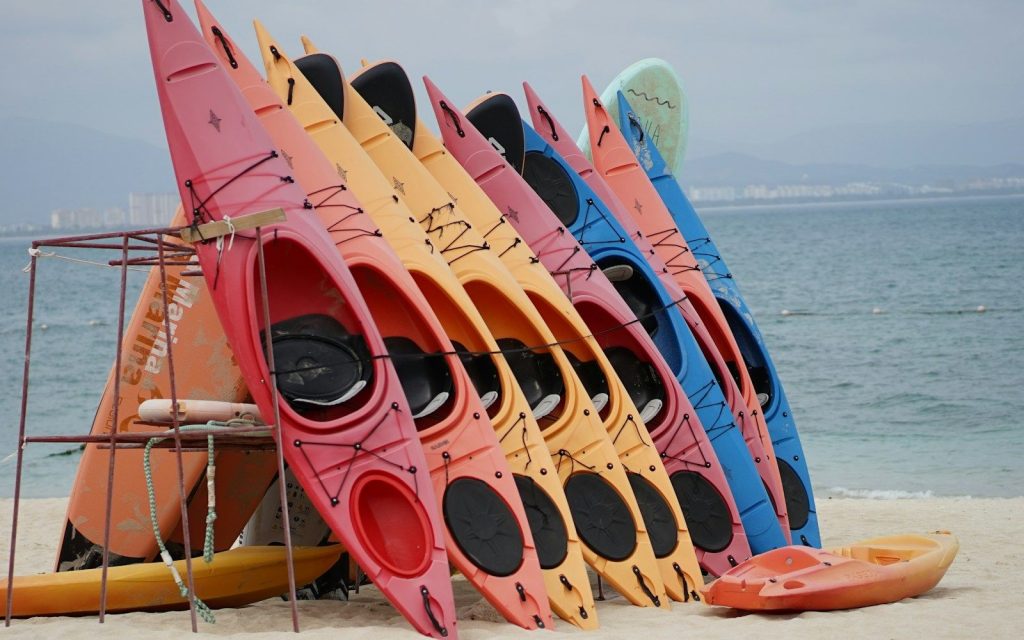
Sports & spots
Which kayak to choose: sit-on-top, sit-in, inflatable or rigid
Sit-on-top or decked, inflatable, rigid or folding, solo or tandem: the grid for choosing a kayak according to your body of water, and…
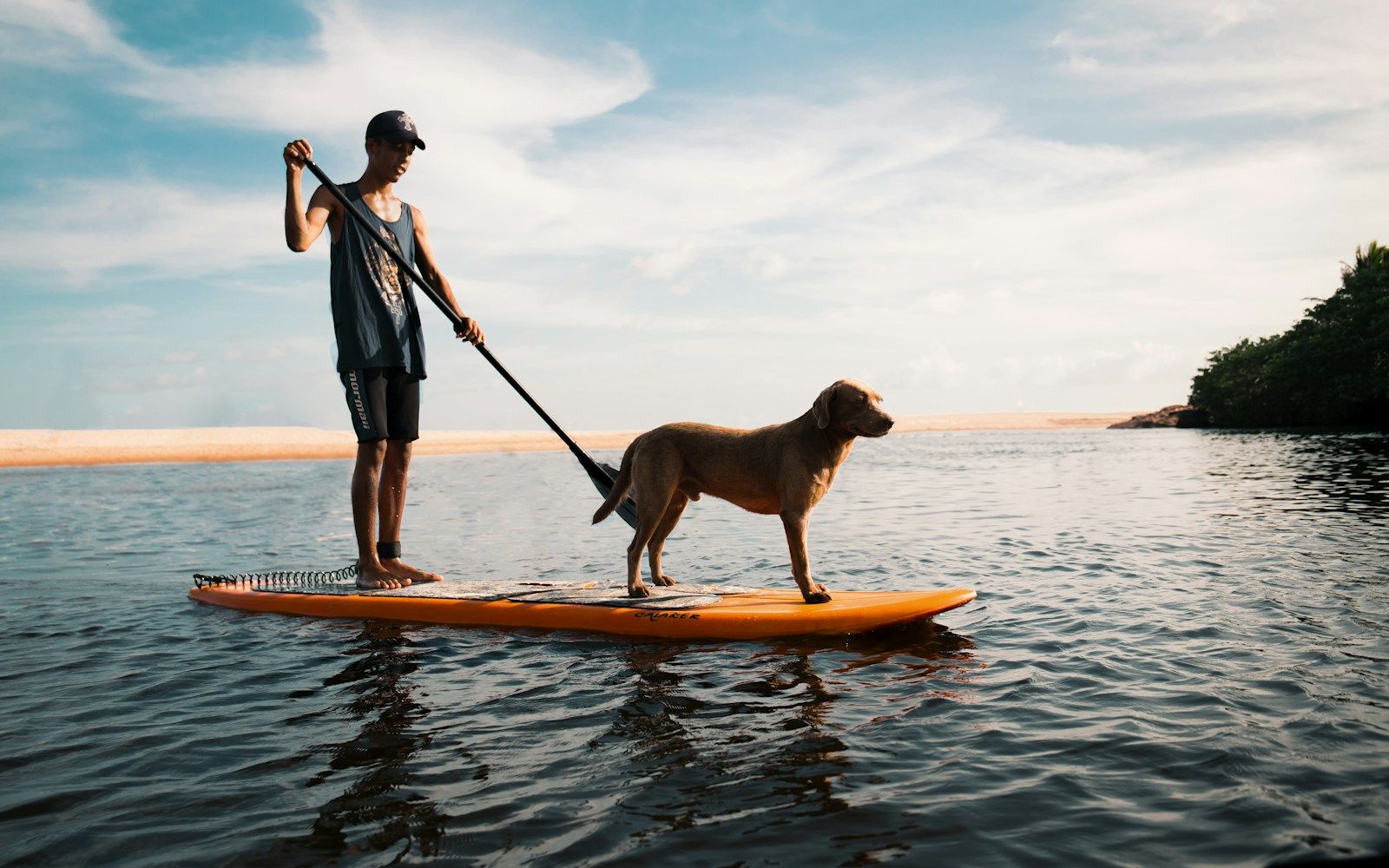
Inflatable or rigid paddleboard: to start out, travel or store your board in an apartment, the inflatable wins; for glide and regular use from the same spot, the rigid one. The trickiest choice comes next, that of size, and no universal rule replaces the manufacturer's data sheet.
Here is what sets them apart, then how to read a product sheet, with examples noted on 30 September 2026. For the basics of the sport, see the stand up paddle guide.
| Your situation | Better suited | Why |
|---|---|---|
| You are a beginner, a few outings a summer | Inflatable | Stable if wide and well inflated, tolerant of knocks |
| You travel by train or in a small car | Inflatable | A 10'6 fits in a bag of about 92 × 40 × 30 cm |
| You live in an apartment, with no garage | Inflatable | A rigid 10'6 measures 3.20 m |
| You paddle every week in the same place | Rigid | Better glide, more responsive, no inflating |
| You want to ride waves | Rigid | Superior glide, including in waves |
| You want to follow the coast beyond 300 m | Rigid over 3.50 m, with a leash | Outside supervised activity, the only category allowed up to 2 miles from a shelter, with a vest or wetsuit and light signalling |
The Decathlon 10'6 inflatable pack fits in a 92 × 40 × 30 cm bag and weighs 9.6 kg with leash, fin and bag, excluding paddle and pump. The trade-off comes back with every outing: inflate, deflate, rinse, dry. Decathlon states 15 PSI (pounds per square inch) in 8 minutes for its 10'7.
The Airgliss manual asks you to inflate "to the pressure in PSI indicated" for optimal stiffness, and bans the compressor. Under-inflated, the board bends under your weight: this is the under-inflated paddleboard mistake.
According to the manufacturer Sroka, an inflatable absorbs knocks and scrapes on rocks better; Decathlon points out the risk of puncture. Do not drag it along the ground, keep it in the shade (the sun raises the pressure) and dry it before rolling it up. See also how to store and maintain an inflatable paddleboard.
Decathlon sums up its strengths: superior glide and performance, responsiveness, very good overall durability. Again according to Decathlon, a rigid board on the other hand fears sharp knocks, needs a large car or a roof rack and costs more. The Tahe Breeze Performer 10'6 measures 320 cm and weighs 12 kg: it needs 3.20 m of space, flat or on its edge, sheltered and never in full sun to avoid deformation.
One foot is 30.48 cm and one inch 2.54 cm: a 10'6 therefore measures 320 cm. The longer the board, the better it glides; the shorter, the more easily it turns.
The wider the board, the more stable; the narrower, the faster. To start on a rigid board, Decathlon advises 76 to 78 cm between 50 and 60 kg, about 80 cm between 70 and 80 kg, at least 80 cm above 90 kg.
The heavier you are, the thicker the board must be to carry you, reminds Decathlon: 15 cm for the Decathlon and Sroka 10'6, 12 cm for the Sroka 10'. A rigid board is thinner: 11.4 cm for the Tahe 10'6.
Expressed in litres, it reflects buoyancy. At 320 cm long, the Decathlon and Sroka inflatables have 290 litres, the Tahe rigid 185 litres. Formulas linking volume and weight vary from one online guide to another: rely on the data sheet.
The maximum load says what the board can carry; the recommended user weight, at what weight it performs well. The Decathlon Compact 9' states 220 kg of maximum buoyancy load, but a user weight of under 80 kg.
| Board | Type | Dimensions | Volume | User weight according to the data sheet |
|---|---|---|---|---|
| Decathlon Compact 9' | Inflatable | 9' × 33 inches | Not stated | Under 80 kg (maximum load 220 kg) |
| Decathlon 10'6 100 | Inflatable | 320 × 84 × 15 cm | 290 L | Up to 130 kg (maximum load below 290 kg) |
| Sroka Easy 10'6 | Inflatable | 320 × 82 × 15 cm | 290 L | Not stated; "paddling for 2 possible" |
| Tahe Breeze Performer 10'6 | Rigid | 320 × 80 × 11.4 cm | 185 L | Maximum load 90 kg |
The inflatable packs consulted (Decathlon, Sroka, Airgliss) include a detachable paddle, hand pump, fin, leash, bag and repair supplies (a kit at Sroka and Airgliss, a glue-free fabric patch at Decathlon). None includes a vest: plan for it separately, the Airgliss manual asks you to wear one.
For paddle length, Decathlon advises your height plus 17 to 27 cm for touring, plus 20 to 30 cm for racing, plus 10 to 20 cm for surfing.
Division 240 classes as a beach craft any human-powered craft under 3.50 m, and longer ones that do not meet the regulatory conditions of watertightness, stability and buoyancy. A beach craft sails in daylight, at most 300 metres from a shelter, except for activity supervised by a club affiliated to an approved federation or by a state body, allowed up to 2 miles. The Ministry of Sports places in it any inflatable with a single chamber, whatever its length.
It places in the other category only rigid boards over 3.50 m fitted with a leash: in daylight, up to 2 miles from a shelter, with, beyond 300 m, a 50 N buoyancy aid or a neoprene wetsuit, a light signalling device and a towline. Details in the sea paddle boarding rules. On site, find out about the authorised zones, often marked by flags, asks the ministry in charge of the sea. Division 240 also bans sailing in marked bathing areas. Before setting off, check the weather and beware of wind blowing from the land, reminds Decathlon.
The Airgliss manual forbids whitewater, breaking waves, strong currents and strong offshore winds, and its warranty excludes damage suffered in waves or against steep banks. These limits apply: division 240 gives priority to the manufacturer's conditions of use when they are stricter. Read the manual before you buy.
On watercourses, the movement of human-powered boats is free subject to regulations, but prefectoral orders may set zones or a direction of travel, states the Ministry of Sports; on a closed body of water, the owner sets the rules. Find out on site. The ministry reminds that on inland waters every user wears a personal buoyancy aid, a wetsuit or protective equipment at all times. On a calm river, the inflatable tolerates rocks better, according to Sroka, if its manual allows it: Airgliss's excludes whitewater.
Renting once or twice tells you which width suits you: note the board's dimensions and compare them to the data sheets.
To rent a paddleboard in the Hérault, six campsites are equipped with Wave-Up stations, from La Grande-Motte to Vendres. Rental starts in front of the station, by scanning its QR code with your smartphone: you choose 1 h, 2 h, 4 h or 8 h, pay by card and find the board, paddle and vest in the locker. Each station is installed inside the establishment's grounds: access conditions are those of the establishment; ask at its reception.
At equal size, a rigid one is slightly more stable, according to the manufacturer Sroka. But the wider a board, the more stable it is, reminds Decathlon. A wide inflatable inflated to the specified pressure is therefore suitable for starting out; a rigid one glides better, especially in waves.
The one whose recommended user weight covers your weight with gear; a higher maximum load is not enough. If the manufacturer publishes a chart, follow it. To start out, take the widest of the suitable sizes.
None of the manufacturers consulted states a lifespan. Their warranties range from one year (Airgliss) to two years (Sroka), and a professional seller owes you a two-year legal warranty of conformity on a new item. The rest depends on maintenance: correct pressure, shade, complete drying.
Yes, as a beach craft: in daylight and at most 300 metres from a shelter. That is the status of any board under 3.50 m and, according to the Ministry of Sports, of any inflatable with a single chamber, even a longer one. Also check the weather, the manual and the beach rules.
A 10'6 needs 3.20 m of space, flat or on its edge, sheltered from rain and sun, in a cover. Some water sports centres offer storage, such as the one at La Palmyre, in Charente-Maritime. Otherwise, choose an inflatable.
Your use and your storage space decide between inflatable and rigid; the data sheet then gives the size, and the manual the intended water. If you are still torn between board and hull, see how to choose a kayak.
Do you run a campsite, a hotel or a water sports centre by the water? The Wave-Up station holds 8 stand up paddle or surf boards, self-service. Request a quote: free, no obligation, reply within 24 working hours.

Sit-on-top or decked, inflatable, rigid or folding, solo or tandem: the grid for choosing a kayak according to your body of water, and…
Position, effort, speed, family: the honest comparison between kayak and stand up paddle to choose your craft, or decide not to…
Where to paddle in Sète: the lido beaches access by access, the Thau lagoon and its closed zones, this…
Estimate the revenue of a self-service rental station on your site, then request your free quote.
