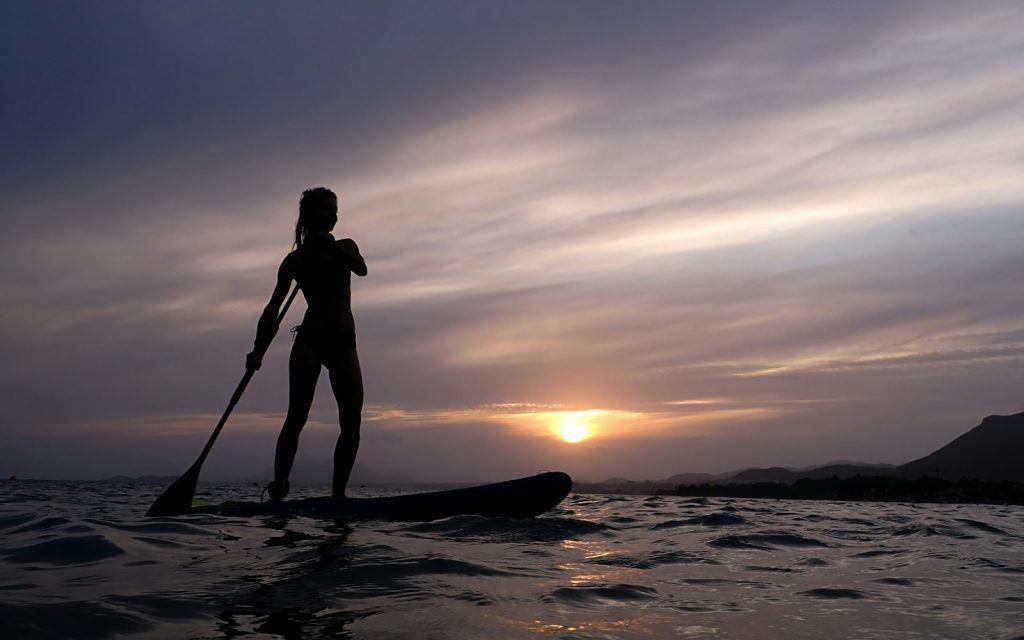
Sports & spots
Paddle : muscles sollicités et calories, de 200 à 700 kcal par heure
Le paddle fait d'abord travailler abdominaux et dos, puis triceps et épaules. Pour 70 kg, comptez 200 à 270 kcal par heure…
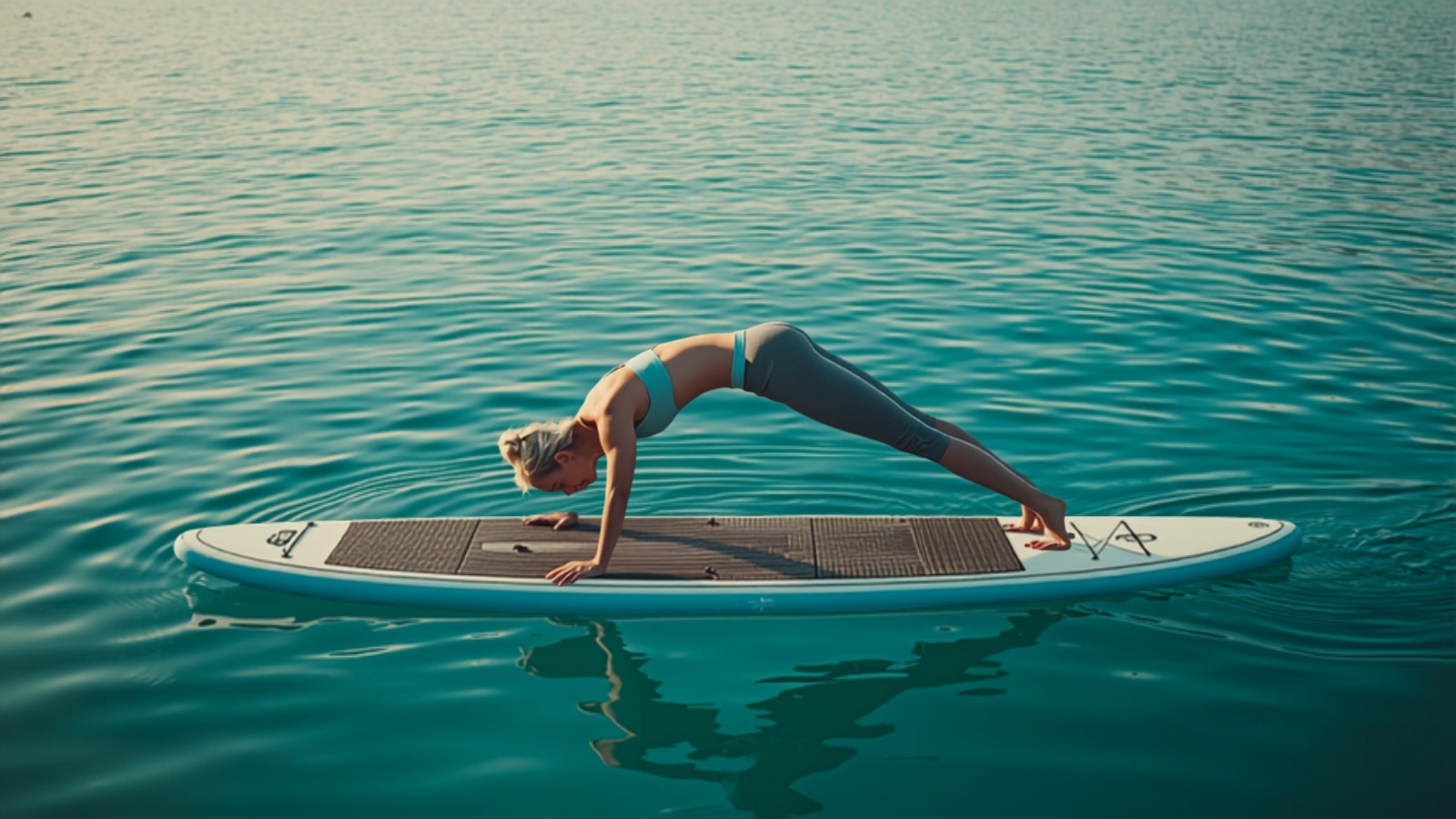
Seven in the morning, a lake without a ripple. On water the color of pewter, a figure rises into downward dog in the center of a paddleboard, hips toward the sky, heels searching for the pad, breathing steady. A tiny gust crosses the water body, the board quivers, the pose wobbles then recovers. That morning, the board has changed jobs: a yoga mat that breathes to the rhythm of the water.
SUP yoga on one side, paddle fitness on the other: two ways of turning a simple board into a floating gym, with no subscription and no neon lights. In this guide, we will see why instability works the body so finely, how to bring together the conditions for a successful first session, five poses accessible to everyone, strengthening exercises to try tomorrow and the safety rules that keep it all relaxed.
In a gym, a squat follows a known trajectory: the body goes down, comes back up, starts again. On a board resting on the water, the same movement becomes a constant negotiation. Every ripple, every weight shift, every breath slightly moves the supporting surface, and the body responds without being asked: the ankles adjust, the hips compensate, the abdominal belt locks in. That is the whole logic of core stability: deep muscles working continuously to stabilize the position, while the visible muscles carry out the movement. In thirteen beginners followed over six weeks, at three sessions a week, trunk endurance improved by 19 to 28 percent depending on the tests, while measured balance had not moved.
This kind of work cannot be seen in a mirror, it is felt the next day: a diffuse, unfamiliar fatigue, lodged in areas the floor does not engage in this way. The water acts as a silent teacher: it punishes haste with an unplanned swim and rewards slowness with new stability. If you have never yet stood on a board, start with the basics in our stand up paddleboarding guide before adding poses.
SUP yoga asks for little, but it really asks for it. First, flat water: a sheltered lake, a closed cove, an inland water body in the early morning, while the thermal wind is still asleep. Then, no wind: a harmless breeze on a casual paddle becomes a serious opponent once you close your eyes in a seated pose. Finally, a wide board, as rigid as possible, that forgives approximate weight shifts.
To avoid drifting during practice, there are two schools: a light anchor tied to the board, or a sheltered area where neither current nor wind has any grip. Choose a spot where you could swim safely (sufficient depth, no submerged obstacles, and away from areas reserved for swimming, where navigation is prohibited), because falling is part of the program; we come back to this below. Also beware of the afternoon: the light is superb, but Météo-France places the start of the sea breeze in late morning, strengthening through the afternoon, precisely when you would want to slow down.
No need to aim for a handstand on your first outing. The five poses below are enough to build a complete session, from the most stable to the most demanding. Keep the board’s center handle as a reference: it is its balance point, and your pelvis must revolve around it.
| Pose | What it brings | The reference on the water |
|---|---|---|
| Child’s pose | Back relaxation, return to calm | Knees around the center handle, forehead resting on the pad |
| Downward dog | Stretch of the entire posterior chain | Hands flat and well apart, gaze toward the toes, patient heels |
| Modified warrior | Hip opening, grounding | Back knee on the pad, torso raised only when the support is firm |
| Seated pose | Breathing, recentering | Legs crossed above the handle, long back, palms on knees |
| Savasana | Final release | Lying on your back, palms toward the sky, let the board rock you |
The progression fits in one sentence: “you fall, it is planned.” The fall is information: it marks the limit of the day, and that limit recedes from session to session. Link the poses slowly, return to child’s pose between each, and treat every plunge as a refreshing break built into the program, provided the water allows it: an unplanned immersion in cold water can cause a thermal shock, which the Sauveteurs en Mer call hydrocution. The Fédération française de surf recommends a wetsuit as soon as the water drops below 18 degrees.
On the water, balance is never a given: it is renegotiated with every breath.
Paddle fitness takes the opposite approach to yoga: you seek intensity rather than calm, but the logic remains the same. Instability enriches every exercise. Squats open the show: feet on each side of the handle, slow descent, gaze on the horizon, not on the toes. Then come lunges, one foot slid toward the front of the board, the other knee dropping toward the pad, arms out like a tightrope walker.
The most demanding remains the plank on the board: forearms on the pad, body aligned from heels to neck, while the water amuses itself by testing your alignment. Finish with paddle sprints: a few strokes at high cadence, a recovery on your knees, then off again. Link it all in a circuit, with the seated yoga pose as the rest period: your breath rises, the water cools you, and nobody watches the stopwatch.
Floating studio or not, a water body remains a water body, with its rules. The leash first, attached to the ankle: the ministry in charge of the sea presents it as a mandatory safety cord. After a fall, it keeps the board within reach, and that board is your first float. Then the life jacket, worn on you: on an inland water body, the ministry in charge of the sea’s water sports guide asks for a personal buoyancy device worn, not simply carried on board, up to 3,700 meters from the shore. Choose a calm area, away from navigation channels and swimmers, and tell someone about your outing (the place, the departure time, the planned return time).
As for equipment, favor a wide, rigid board, designed for stability rather than glide; a well-inflated inflatable is perfectly suitable. Lay the paddle across, under an elastic cord if possible, to find it again after each pose. And keep in mind that the classic beginner paddleboarding mistakes (poor stance, eyes glued to the feet, wind ignored) weigh more as soon as you add poses to the equation.
No. The poses offered on the water remain deliberately simple, and the challenge shifts: holding a basic position on a moving surface already demands all your attention. A complete yoga beginner can therefore start directly on the board, as long as they master the paddleboarding basics: calm water, slow progression, a fall accepted as a normal step in learning.
A board cut for stability before speed: wide, thick, and as rigid as possible. Inflatable models work very well if they stay firm enough: the surface must remain hard under your palms. A generous pad improves comfort for the knees, and a well-placed center handle serves as a natural reference for aligning the pelvis in each pose.
Yes, provided you respect the fundamentals: know how to swim, leash attached, buoyancy jacket worn and not left on the board, a calm sheltered area, one person told of your departure and return. Stay near the edge, at a distance you could swim back, especially the first few times. With two people, the practice gains in safety and pleasure: you correct each other, encourage each other, laugh at the falls.
Self-service paddleboard rental stations are designed for beaches, leisure bases and campsites. With Wave-Up, the QR code displayed on the station opens the booking page in your smartphone’s browser: you pay by card, a code or a QR code opens the locker, board, paddle and life jacket inside, for 1 h, 2 h, 4 h or 8 h. Access conditions are those of the establishment hosting the station. Look for a stand up paddleboard locker near your spot to try before investing.
Next time you walk along calm water in the early morning, look at it differently: it is a training room waiting only for you. A wide board, a life jacket on your back, three poses and a willingness to welcome the fall: that is all it takes to begin. If you do not have a board yet and a self-service station exists nearby, it entrusts one to you for the length of a session: book your slot, paddle, breathe.
SUP yoga mainly needs calm water and a stable board. Between the Mediterranean and the Thau lagoon, Marseillan-Plage gives access to both, and the other stations in the Hérault can be found on the self-service paddleboard rental in the Hérault page.
Wide, thick, firm: these qualities can be checked on a board’s spec sheet, which gives its width, thickness, volume and recommended rider weight; on an inflatable, firmness also depends on the pressure indicated by the manufacturer. Our article inflatable or rigid paddleboard, and in what size teaches you to read these figures before buying a board for your poses.

Le paddle fait d'abord travailler abdominaux et dos, puis triceps et épaules. Pour 70 kg, comptez 200 à 270 kcal par heure…
Night paddle boarding is banned at sea and limited to daytime on the Canal du Midi. The landmark: sunset…
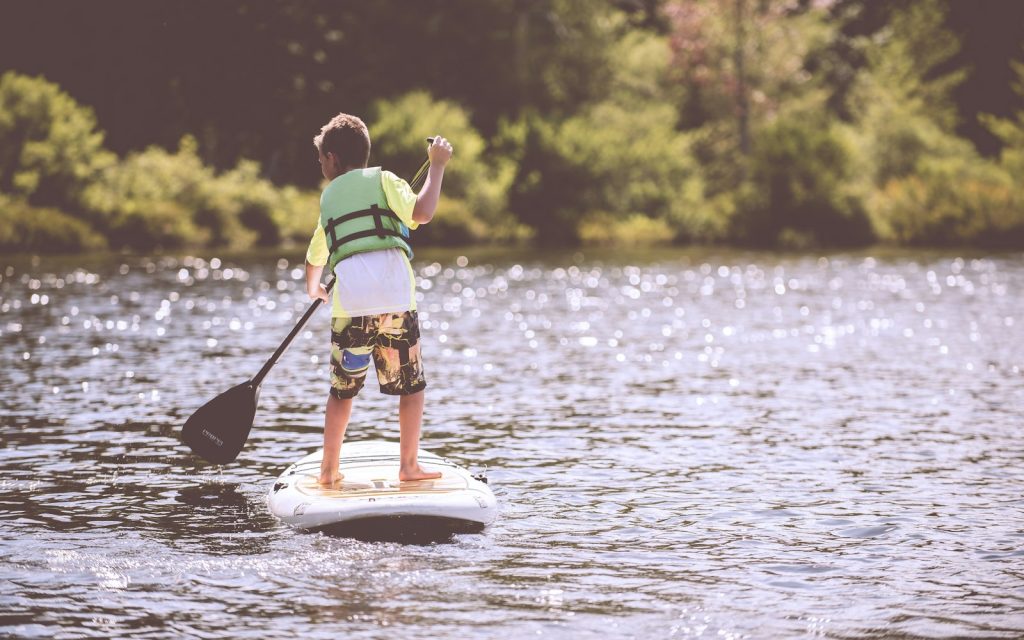
No law forbids renting a paddle board if you cannot swim, but the federation makes it a prerequisite. What the code says…
Estimate the revenue of a self-service rental station on your site, then request your free quote.
