Sports & spots
When to paddle in the Hérault: the month-by-month guide
Sea, air, sun, wind and crowds from April to October, according to Météo-France and Insee: the best month to paddle in…

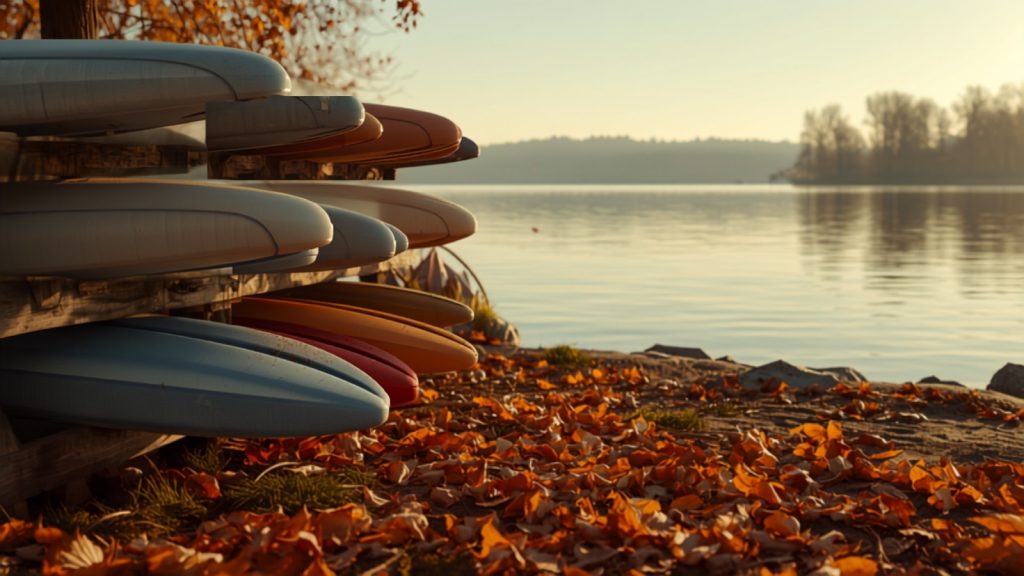
Half past seven, a Saturday in November, on a lake that July still crowded with people. The mist lingers at the water’s edge like cold smoke, a heron takes off without a sound, and the pontoon welcomes only a single neoprene-clad figure. She inflates her board, breathes out a cloud of vapor, then glides onto a mirror that nobody will disturb before noon.
Paddleboarding in winter or autumn means changing sport without changing equipment: same board, same paddle, but cold water that imposes its own rules. This guide explains why the late season is worth the trip, how to gear up, which precautions to take, how to read the weather and where to put your board in when the mercury drops.
First, space. After All Saints’ Day, the water bodies empty out: no more towed buoys, no queue at the pontoon, no engine chop. What remains is the water, the shore and you. This stillness transforms your practice: you dare lines you would never have drawn between two pedal boats, you listen to your paddle stroke, you progress. The fundamentals in our stand up paddleboarding guide are much easier to work on over deserted water.
Then, the light. The winter sun stays low from morning to evening and gives the banks that raking light photographers wait for in summer only at the golden hours. Add the birds: herons, great cormorants, migrating ducks stopping over on calm water bodies. A December outing sometimes feels more like a naturalist’s hide than a sports session.
Rule no. 1 of the cold season fits in one sentence: you dress for the temperature of the water, not that of the air. A fine January sun does not warm a lake, and the water is where you may well end up. The full neoprene wetsuit thus becomes the base: a 4/3 generally covers autumn, a 5/4 takes over in the depths of winter (indicative thicknesses, to adjust to your sensitivity to cold and your water body).
Around the wetsuit, everything counts: neoprene booties (high-cut as soon as the water bites), gloves or mittens, a hood when the wind joins in. The leash stays attached to the ankle on calm water, as the guide to water sports at sea from the ministry in charge of the sea points out; on rivers and whitewater, the Fédération française de surf prohibits it on the contrary, because of the entrapment risk, and makes a buoyancy aid mandatory there. These settings have no place in a winter outing anyway. The buoyancy aid is always worn, over everything else: on lakes and rivers, the order of 10 February 2016 requires wearing it at all times, or wearing a wetsuit that provides both buoyancy and thermal protection. Complete with a waterproof pouch for your phone, and leave a bag on the shore with dry clothes, a hat and a hot drink: changing quickly when you come out is part of the equipment.
Cold water does not test your balance: it tests your preparation.
The danger of the season has a name: thermal shock. A fall into very cold water triggers a reflex reaction in the body: a sudden gasp, breath that locks up, a racing heart, limbs that respond less and less. Even an excellent swimmer can find themselves in trouble right next to their board. That is why life jacket, leash and proximity to the shore together form the foundation of winter practice.
Then the rules, in order. Never go out alone; if you have no partner on the water, tell someone on land: route, departure time, return time. Stay very close to the edge, enough to swim back to shore without heroics. Cut it short: you end a winter outing before you get cold, never after. If you fall, climb back onto the board first, then head for the bank without delay. And keep in mind that many beginner mistakes forgiven in summer are no longer forgiven in January.
Winter is practiced in windows. The right one: an established high-pressure spell, a forecast wind that is light and steady, clear visibility. Beware in particular of offshore wind, which flattens the water near the edge and imperceptibly pushes you out to open water, where it strengthens. Add fog, capable of erasing the shore faster than you imagine, and short days that require you to be back well before nightfall. Check the forecast the same morning rather than the day before, and give up without regret when it worsens.
| Season | Indicative outfit | Extra rules |
|---|---|---|
| Early autumn | Light full wetsuit, booties | Leash, life jacket, tell someone close |
| Late autumn | Full 4/3, booties, gloves | Stay near the edge, shorter outings |
| Winter | Full 5/4, hood, gloves, high-cut booties | Never alone, stable weather window, shore within swimming distance |
| Early spring | Full 4/3 as long as the water stays cold | Keep all the winter rules: the air warms up before the water |
In winter, choosing the water body accounts for half of safety. Favor sheltered lakes and enclosed basins: small surfaces, nearby shores, wind slowed by terrain or trees. Leisure bases and protected coastal ponds offer the same advantage. Conversely, keep the winter sea for very experienced, accompanied paddlers, and leave rivers swollen by rain to their solitude.
That leaves the question of access, since seasonal renters shut up shop once summer is over. Where a water body is equipped with a self-service paddleboard locker (booking and payment in front of the station, by scanning its QR code; personal code, paddle and life jacket provided), you no longer depend on a renter’s hours: the station is used independently, with no counter, during the slots opened by the operator. Off-season, ask the establishment that hosts it: if it opens slots, you will be able to set out at dawn on a December morning, when the light is at its finest and the lake at its smoothest.
It is better to learn in the good season, on still-warm water, where falling remains harmless. A beginner who wants to extend the year will choose a small sheltered lake, very calm weather, an experienced companion and a full neoprene outfit, staying very close to the edge and clearly shortening the outing.
A full neoprene wetsuit, chosen for the water temperature and not the air temperature: a 4/3 for autumn, a 5/4 for the depths of winter, to adjust to your sensitivity to cold. Complete with booties, gloves and a hood as soon as the water gets really cold, without forgetting life jacket and leash.
Keep contact with the board thanks to the leash, let the body’s first reaction pass by focusing on your breathing, then climb back onto the board before anything else. Then head for the shore without delay, change immediately and wrap up warmly. On a well-prepared outing, the bank is never far anyway.
Yes, without hesitation. In cold water, the buoyancy aid keeps you at the surface while the body absorbs the shock of immersion, and it makes climbing back onto the board easier. Wear it snug, over the wetsuit, in addition to the leash: the two work together.
Off-season paddleboarding simply asks for method: an outfit designed for the water, safety rules applied without exception, a carefully chosen weather window. In exchange, it offers silent shores, lights that July knows nothing of and water bodies given back to the herons, and to you. If a Wave-Up station is installed near you, ask the establishment that hosts it about its winter access conditions: if they allow it, you will be able to book your board in front of the station, by scanning its QR code, and glide at daybreak.
Off-season, sheltered water bodies remain the safest. In the Hérault, Marseillan-Plage opens onto the Étang de Thau, and the department’s other stations are listed on the paddleboard rental in the Hérault page: ask the establishment about opening periods.
The sheltered lakes recommended above may each have their own regulations: zones, hours and permitted craft change from one water body to another, and some areas close for part of the year. Our article on lake paddleboarding, between local rules and cold water explains where to find these rules and what traps flat water sets: rising wind, cold water, a shore farther away than it looks.

Sea, air, sun, wind and crowds from April to October, according to Météo-France and Insee: the best month to paddle in…

Choosing your board, standing up from your first session, staying safe on the water: everything you need to know to get started…
Paddleboarding works the abs and back first, then the triceps and shoulders. For 70 kg, expect 200 to 270 kcal per hour…
Estimate the revenue of a self-service rental station on your site, then request your free quote.
