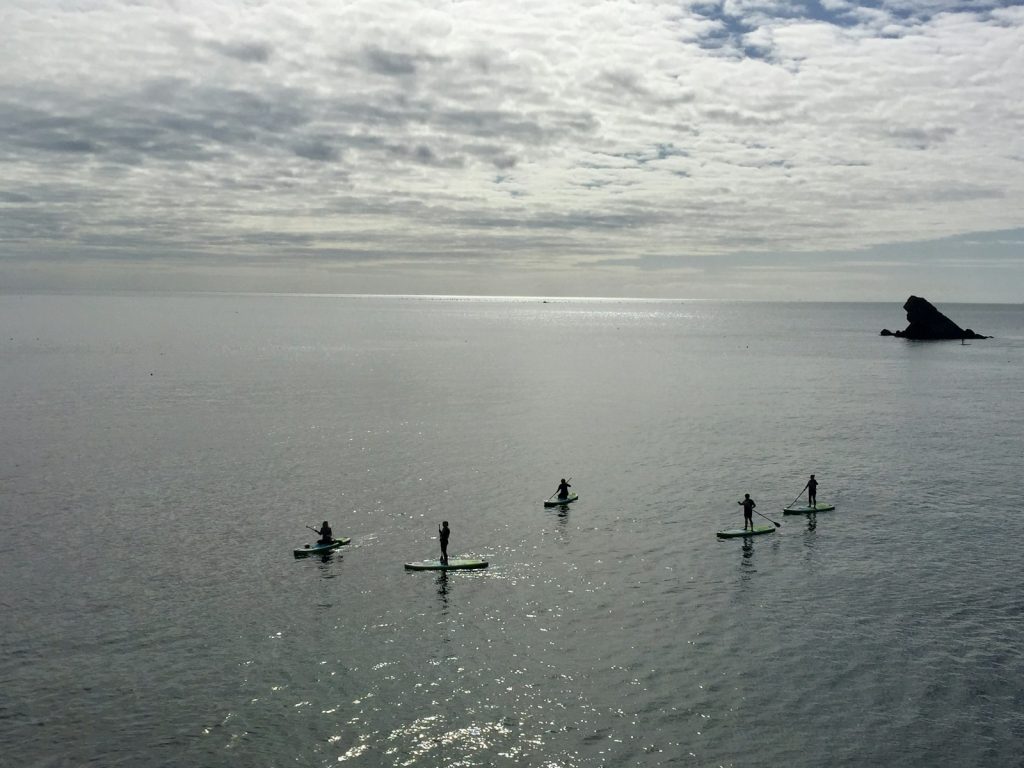
Sports & spots
Trending sport in 2026: why stand up paddle appeals so much
Sport in 2026 is practised outdoors and to feel good. INJEP figures, this year's trends, why…
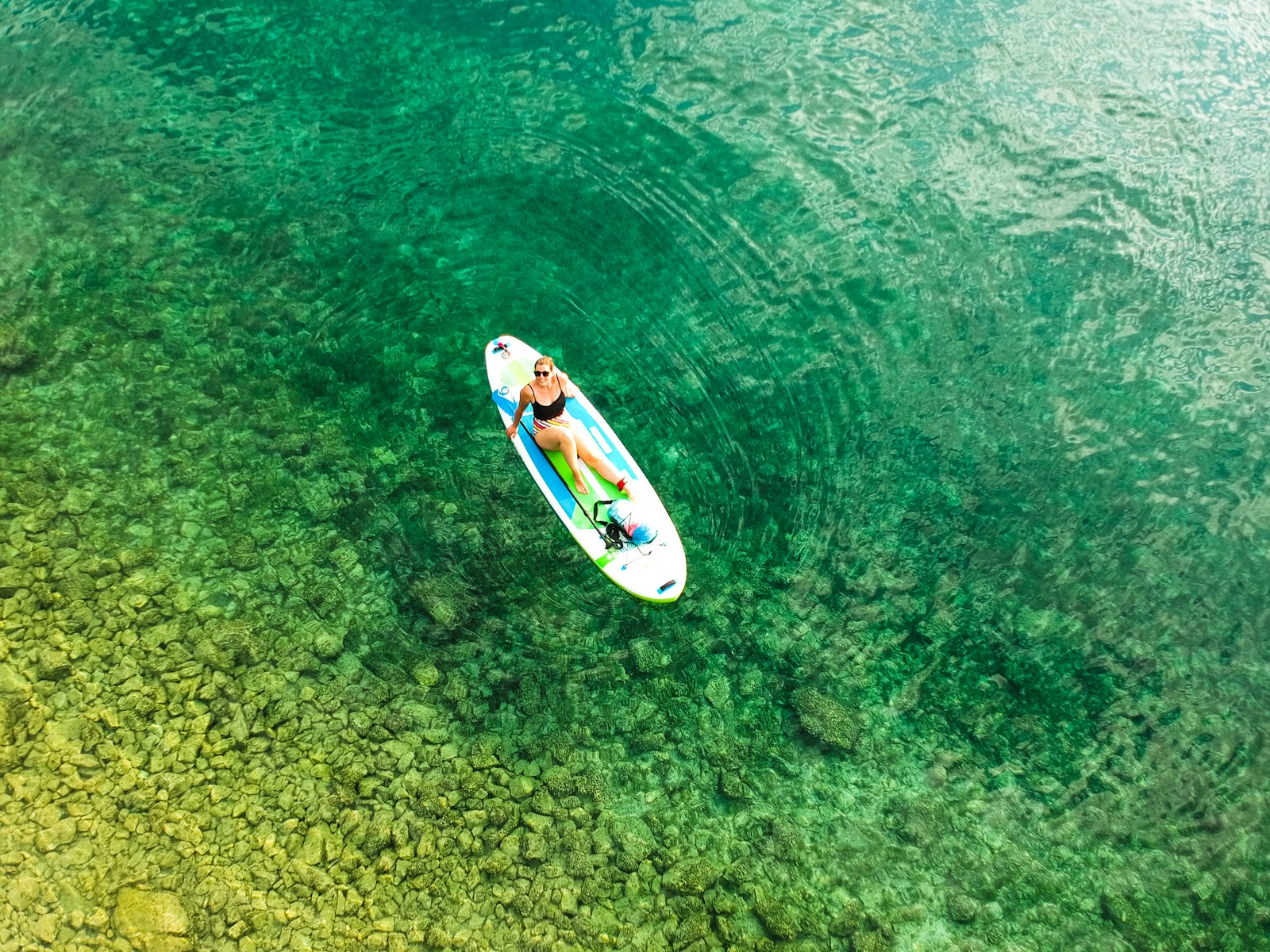
The benefits of paddle for the body are measured: in an Australian study, six weeks of stand up paddle improved endurance, core strength and perceived quality of life in sedentary adults. On mood, water and nature play their part: studies link time spent by the water to better mental health, without yet being able to prove the cause.
First there is the feeling: clear water under the board, the lap of the paddle, the horizon as your only screen. What science says about it fits in a few small, cautious studies. Here they are, with their limits.
Researchers at Bond University in Australia had 13 sedentary adults, 46 years old on average, with no physical activity for at least six months, paddle three times a week for an hour over six weeks. The results, published in 2016:
| Measure | After six weeks |
|---|---|
| Aerobic capacity (VO2max per kilo) | From 19.68 to 24.32 ml/kg/min |
| Abdominal endurance (front plank) | +19,78 % |
| Back muscle endurance (Biering-Sørensen test) | +21,33 % |
| Quality of life, psychological domain | +17,49 % |
| Static and dynamic balance | No significant change |
| Weight | From 85.45 to 84.91 kg on average, difference not reported as significant |
The core strength probably comes from instability: the trunk works constantly to keep balance. Small sample, no independent control group: the authors themselves speak of “some evidence”. For muscles used and calories burned, see our article on the muscles and calories of paddle.
It is the most-cited benefit, and the least demonstrated. In the Australian study, six weeks changed neither static nor dynamic balance. The authors suggest a period that was too short, a test that was not sensitive enough or participants with no deficit to correct.
Among seniors, a lead emerges. At the University of São Paulo, older people practised stand up paddle at sea while another group walked. The paddlers swayed less when standing with one foot in front of the other or on tiptoe, eyes open or closed; the walkers did not. The PEDro database gives this trial only 4 points out of 10 for its method: an encouraging signal, not proof.
In the Australian study, measured with the World Health Organization questionnaire, quality of life improved, notably in its psychological domain (+17.49%) and in participants’ satisfaction with their health (+28.05%).
In Denmark, the Freedom on Water programme, launched in 2020 by the organisation Surf & SUP Denmark, takes adults living with depression, anxiety or stress out on the water: sessions of about two hours, led by volunteer instructors, combining paddling, mindfulness on the water and a shared moment on return. Participants say that the concentration required on the water pushes away rumination, and that this calm often lasts the rest of the day. Interviewed again in 2023, six of them described a lasting effect on their wellbeing. Accounts gathered by researchers from a small group, not a clinical trial.
Paddle is practised outdoors, on the water. Three pieces of research shed light on this advantage.
None of these studies is about paddle, and none proves cause: healthy people may simply go to the waterside more often. But all point in the same direction, and paddle combines both: movement, and water all around.
The Ministry of Sports recommends that adults do 150 minutes of moderate-intensity endurance activity a week, or 75 of vigorous intensity, and muscle strengthening on at least two non-consecutive days. The Australian programme amounted to 180 minutes a week, and the English study observes its association from two hours of nature. Three one-hour outings at a moderate pace, the rhythm of the Australian study, therefore cover these 150 minutes.
The studies involved sedentary adults aged 18 to 60 with no history of back pain, seniors and adults receiving support for their mental health. The prerequisite: being able to swim, as the Fédération française de surf requires. If the water intimidates you, read our article on paddle without knowing how to swim. Pregnancy, pain, treatment: ask your doctor’s advice.
The Fédération française de surf also asks that you never go out alone, check the weather, give up in a storm or strong wind and keep your leash on at sea as on a lake. At sea, leisure paddleboards under 3.50 metres are beach craft: according to the ministry in charge of the sea, they must not go more than 300 metres from the shore, and wind blowing offshore calls for the greatest attention.
To try it on holiday, six campsites in the Hérault are equipped with a Wave-Up station (see our equipped sites). You scan the QR code displayed on the station, book and pay in your smartphone’s browser, then the board, paddle and life jacket come out of the locker. Each station is installed within the grounds of its campsite: the access conditions are those of the establishment, so ask at its reception.
We found no published trial in people with back pain: the Australian study excluded them. In its participants, back muscle endurance improved by 21.33% in six weeks. In case of pain, ask your doctor’s advice before getting started.
Studies on blue spaces link time spent by the water to better mental health, and Danish participants describe rumination fading away on the board. None yet proves that paddle reduces stress: it is a serious lead, not a promise.
Nothing allows us to promise it. In the Australian study, average weight only went from 85.45 to 84.91 kg in six weeks, while aerobic capacity improved markedly.
Yes, if your doctor has no objection and you can swim: the São Paulo study was precisely about seniors, at sea. Start on calm water, kneeling if needed, life jacket on.
Core strength, endurance, mood: the effects of paddle are measured, modest and encouraging, and the water adds what researchers are only beginning to understand. The simplest thing is still to try it, on a calm day, near the shore.
Do you host holidaymakers by a lake, a beach or a pond? Offer them this moment without tying up your team: a paddle rental locker for campsites puts boards, paddles and life jackets in self-service; the holidaymaker books and pays at the station, from their smartphone. Request a quote, reply within 24 business hours.

Sport in 2026 is practised outdoors and to feel good. INJEP figures, this year's trends, why…
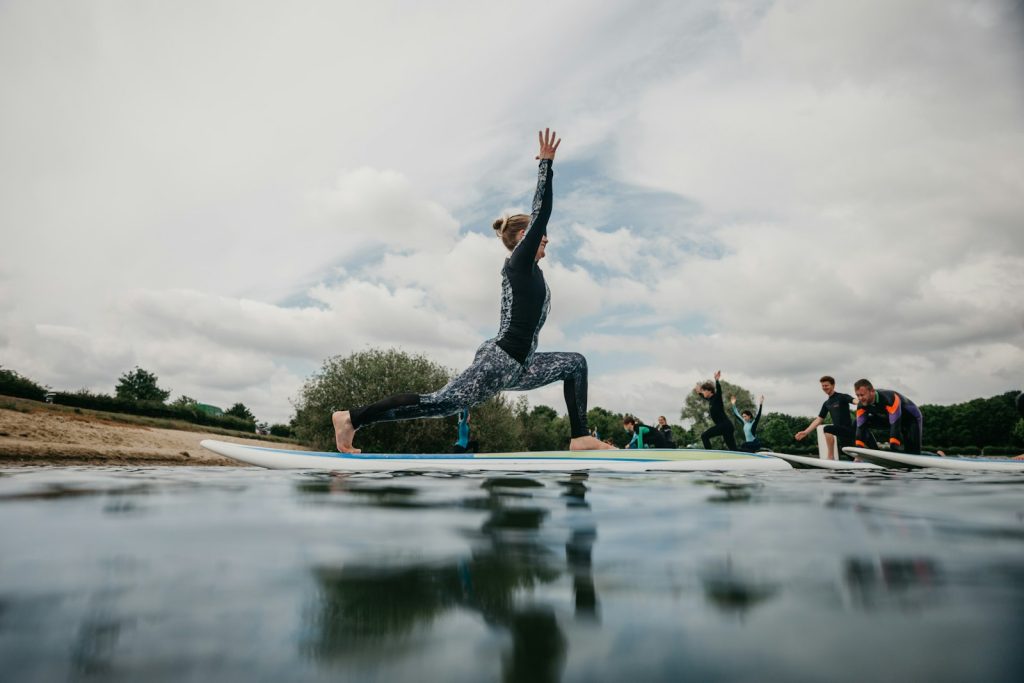
Pilates on water is the floor-based method on a stand up paddle board: principles, six exercises to get started,…
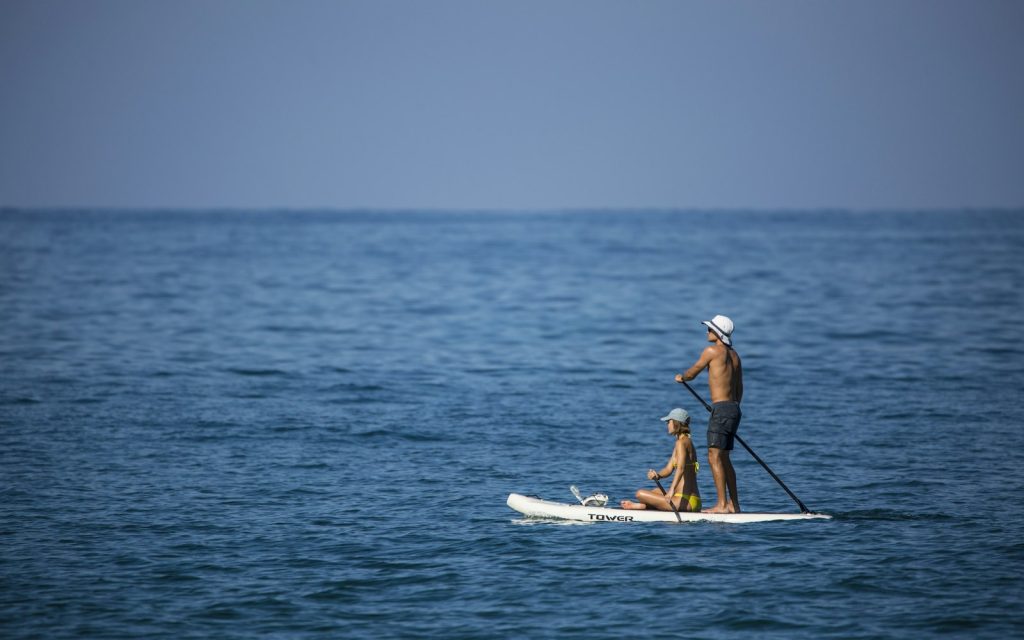
Jellyfish, weevers, sea urchins, bottlenose dolphins, sharks: what you really meet while paddling in the Mediterranean, with the Anses guidance in case…
Estimate the revenue of a self-service rental station on your site, then request your free quote.
