
Operator advice
Campsite activities for children: ideas by age and safety rules
Activity ideas for children at the campsite, from toddlers to teens, safety rules for the pool, the playground…
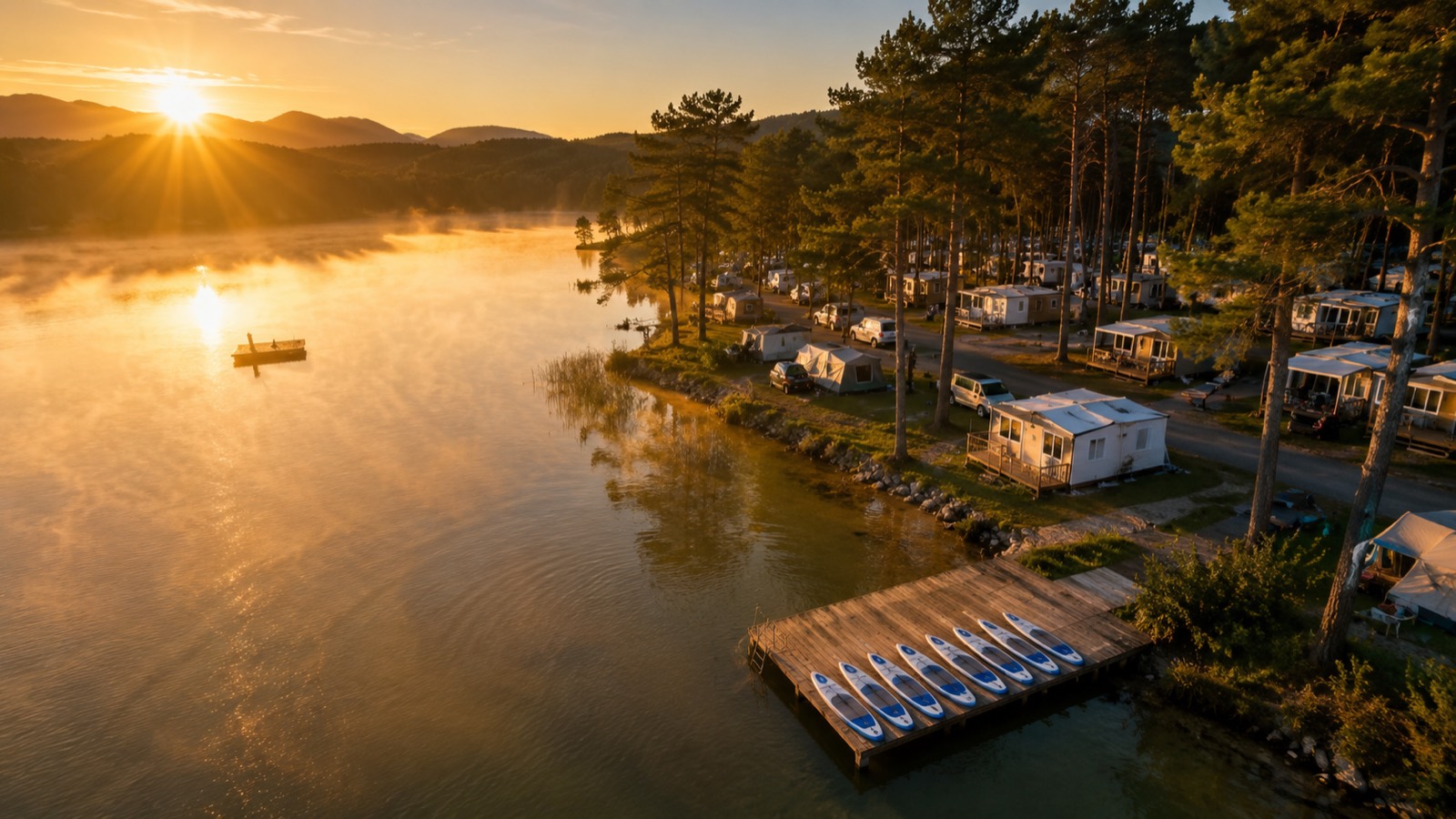
A watersports equipment renter writes to you in February: it will set up its boards near the lake, handle the rentals and pay you a fee for the season. You put up nothing. What remains is the contract, which it will send you ready-made.
This document is almost always titled a precarious occupancy agreement, and it is rarely the right instrument. What matters most lies elsewhere: insurance, liability in case of an accident, the customer relationship. Here is what each line must say, with the sources for the texts.
| Set-up | Equipment | Who sets the prices | Contract |
|---|---|---|---|
| Provider set up on your site | Theirs | Them | Occupancy, fee |
| Provider you pay | Theirs | You | Service contract |
| Direct management | Yours | You | Employment contracts and insurance |
The price column drives everything else. First set-up: the renter sets its own prices and collects the money; you put up nothing and control nothing. Second: you set the prices and collect the money, but you become the principal under the labour code. Third: you run the activity, with equipment and staff at your expense. See also watersports at campsites.
Article L145-1 of the French Commercial Code applies the commercial lease regime only to premises in which a business is run, and to bare land carrying buildings erected with the owner’s express consent. A bare pitch where the renter sets up its equipment and packs it away in September falls outside it, and the agreement can then be drafted freely. So first check whether a building is part of the deal.
If it is, Article L145-5-1 reserves the precarious occupancy agreement for cases where occupancy is “authorised only because of particular circumstances independent of the parties’ will alone”. Bpifrance Création draws two cumulative conditions from this: those circumstances must prevent a commercial lease, and the fee must remain well below market rate. But a season is the normal rhythm of your business, and a percentage of turnover is far from modest. Otherwise the agreement is requalified and an eviction indemnity is due.
| Instrument | Duration | Point to watch |
|---|---|---|
| Precarious occupancy | Tied to a contingency | Requalified if the fee is at market rate |
| Derogatory lease | 3 years | One month too many: commercial lease |
| Seasonal lease | 6 months, ends without notice | No use outside the season |
The seasonal lease suits a campsite better. Article L145-5 rules out automatic requalification for it: its rules on the derogatory lease “do not apply to a seasonal rental”. Service Public specifies that it does not exceed six months and creates no right to renewal, but that it can be signed again every year. If the renter keeps the premises out of season, such as a container left over winter, the lease becomes commercial again.
The duty of vigilance in Article L8222-1 of the French Labour Code targets the buyer of a service, from €5,000 excluding tax (Article R8222-1), at signature and then every six months (Article D8222-5). If you rent out a pitch, it does not apply to you. Ask for the certificate anyway: Article L8222-2 imposes joint financial liability on anyone who ignores it.
Article 1240 of the French Civil Code covers fault, Article 1242 custody: one is liable for “things that one has in one’s custody”. The boards belong to the provider, who answers for their condition. You answer for the grounds, the pontoon and the signage: a slippery path or a poorly marked launch point engages your business.
The French Sports Code imposes hygiene and safety guarantees on establishments where physical or sports activities are practised (Article L322-2). Its Article L321-7 makes their operation conditional on an insurance contract covering the civil liability of the operator, of instructors and of any employee, as well as of people admitted to the establishment “to practise the activities taught there”. This limit matters: it is not blanket cover for your holidaymakers. Article L321-8 punishes the lack of insurance with six months’ imprisonment and a €7,500 fine.
Article R322-6 requires the operator to inform the prefect of any serious accident, and the ministry in charge of sport asks for the report within 48 hours to the departmental youth, engagement and sports service. Require to be told the same day. Our guide to insurance for paddle rental completes the subject.
| Formula | Advantage | Drawback |
|---|---|---|
| Fixed | Certain, collected in advance | Nothing more if the season is good |
| Percentage | You follow the activity | Self-reported, zero if the summer is rainy |
The two can be combined. If you choose a percentage, write down the basis: turnover excluding tax collected on your site, deposits excluded, monthly statement, access to supporting documents. A percentage with no right of audit is not a clause.
Also raise the tax question. The Bulletin officiel des finances publiques recalls that Article 261 D 2° of the French General Tax Code exempts from VAT the rental of undeveloped land and bare premises, but excludes rentals that are “a means of continuing, in another form, the operation of a commercial asset”. Have yours classified.
In September, the renter has gone and you know nothing: neither how many holidaymakers rented, nor at which times. The CNIL recalls that the data controller determines the purposes and means, and that “the classification does not depend on a contractual choice but on the facts”. If the renter collects payments with its own tool, the file is theirs: require aggregated indicators in the contract.
That leaves the reviews: the holidaymaker does not tell the operator from the provider, and a damaged board lands on your listing, not theirs. If you sell yourself, see the terms and conditions of sale for an online rental.
A self-service station brings the activity back within your perimeter without creating a position. The Wave-Up one takes up about 1.7 square metres of floor space: 8 slots for stand up paddle or surf boards, 8 lockers, 8 paddle clips. Powder-coated 316 stainless steel, strike plates designed for sea fog, opened by the code of the current booking. Solar power and battery as standard, no electrical connection. Designed and made in France by our industrial partner, with a 2-year manufacturer warranty on parts and labour, vandalism excluded.
Ce que cela déplace : le matériel vous appartient et vous fixez vos tarifs ; Wave-Up prend en charge les locations et le service aux vacanciers. En contrepartie, c’est un investissement, et les planches, pagaies et gilets sont à votre charge. L’offre tient en deux lignes : vous achetez la station, prix sur devis, contre l’application de réservation et de paiement, la gestion des locations et le service après-vente, maintenance non incluse.
The rental station for campsites page details the installation, and our references show the 6 sites equipped in the Hérault. Delivered as a kit, price on quote within 24 working hours.
Rarely on solid ground. Article L145-5-1 of the French Commercial Code requires circumstances independent of the parties’ will alone, and Bpifrance Création adds a fee well below market rate. A season and a percentage of turnover do not meet that test.
Six months, according to Service Public. It ends without notice and creates no right to renewal, but nothing prevents signing a new one every year.
Yes, and specifically for the activity carried out. Article L321-7 of the French Sports Code makes the operation of an establishment offering physical or sports activities conditional on civil liability insurance, and Article L321-8 punishes its absence.
The owner of the equipment has custody of it within the meaning of Article 1242 of the French Civil Code and answers for its condition. You remain liable for what belongs to you, under Article 1240: access to the water, pontoon, signage.
Whoever determines the purposes and means of the processing, the CNIL recalls, and the classification follows from the facts, not the contract. If the provider collects payments with its own tool, the file is theirs.
Welcoming a provider remains legitimate, especially to test a season. Write the contract yourself, and measure what you give up: prices, equipment, the customer relationship, data, reviews. If the balance tips the other way, a self-service station leaves you all of that. Request a quote: free, no obligation, reply within 24 working hours.
The third set-up, direct management, makes you the employer of the team running the rental. Before comparing it with a fee, cost the position with our guide to the seasonal contract at a campsite: paid leave, housing and real cost.

Activity ideas for children at the campsite, from toddlers to teens, safety rules for the pool, the playground…
The dates of the campsite off-season, Insee figures month by month, the 2027 long weekends and the customer groups…
Buying a campsite, creating one or equipping an existing site: public market figures, what buyers look at…
Estimate the revenue of a self-service rental station on your site, then request your free quote.
