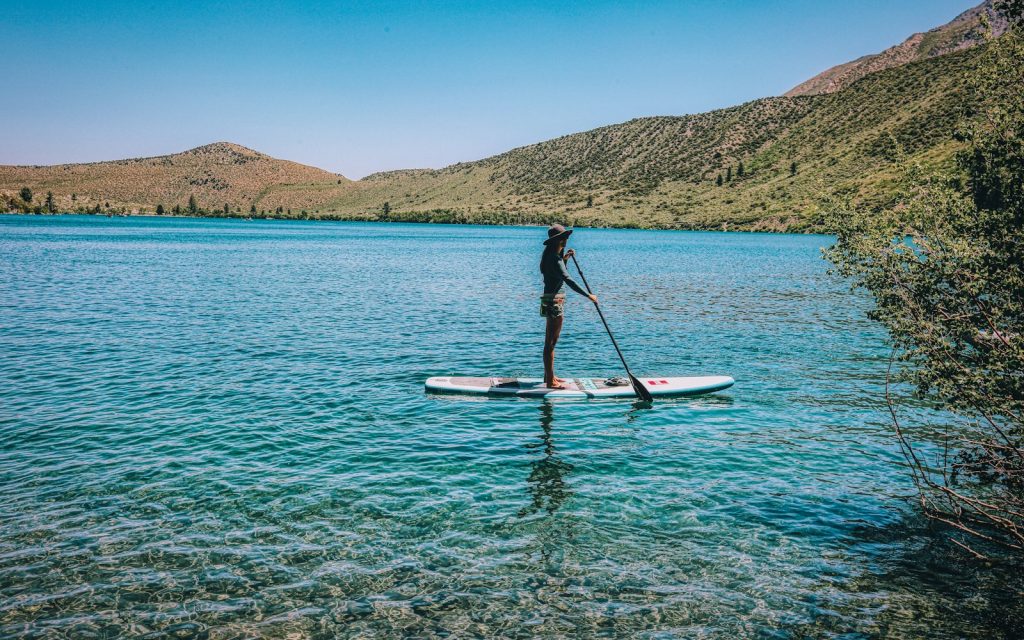
Sports & spots
Lac du Salagou: paddling, swimming, access and rules
At Lac du Salagou, paddle and swimming are allowed and access is free, outside the dam area and, from 1…
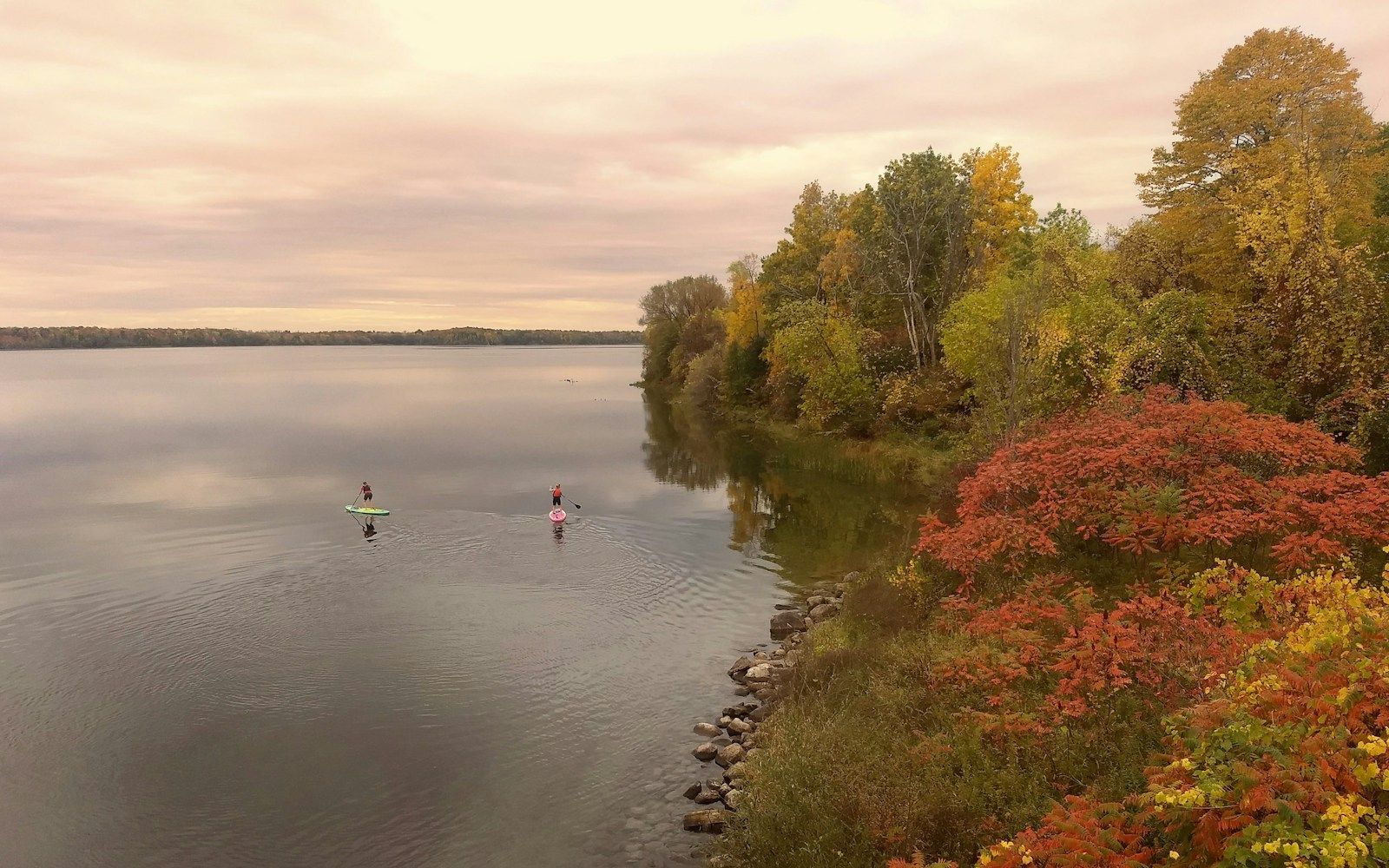
River paddling can be done, but not with the habits learned at sea or on a lake. In current, the leash that links the ankle to the board can catch on a branch or a stake, and hold you back with it.
The direct answer: on a river with current, the French Surfing Federation (FFS) prohibits the leash, and the French Canoe-Kayak Federation (FFCK) makes rivers the exception to its quick-release leash. A buoyancy device is worn at all times on inland waters, and the FFS requires closed shoes on a river, where it advises a helmet. Choose an easy route, land before each weir or dam, give way to boats and never set out alone.
Watercourses are the second leading place for fatal drowning in summer, after the sea: from 1 June to 30 September 2025, Santé publique France recorded 104 deaths out of 409 there, all activities combined, including 12 in a canal.
Famous descents, such as the Ardèche gorges and the Dordogne, call for the same checks. Also read your board’s manual: the one cited by our guide to choosing your board prohibits whitewater.
The Ministry of Sports’ guide for fresh water, which covers lakes, canals and rivers together, says to always attach the leash to the ankle. The federations, for their part, distinguish according to current.
| Environment | Leash | Source |
|---|---|---|
| Lake or canal without current | Always | FFS (July 2022), Ministry of Sports |
| River with current | Prohibited | FFS (July 2022) |
| Whitewater river | To be ruled out | FFS SUP regulations |
| Blue paddle level | Quick-release, except on rivers | FFCK (June 2023) |
In current, the leash ban is a federal rule: the order of 10 February 2016, which sets the equipment on inland waters, does not mention it. The FFS specifies, however, that its regulation applies to all practice, free or supervised. For calm water, see our guide on paddling on a lake.
The FFS regulation names the danger: entrapment. Even at sea, it asks you to remove the leash, well upstream, before an area of current and obstacles. On a river, obstacles are numerous: fallen trees, rocks, and this post or stake hidden beneath the surface that the FFS cites among the environment’s dangers.
Several online guides advise a quick-release leash, fixed to the belt or the life jacket, for going down a river. No French federal or official document consulted recommends it: the FFS says not to wear a leash in current. If you are considering this gear, ask a club’s opinion before using it.
Without a leash, a fall can separate you from the board. The FFS regulation recommends paddling with at least two people on a tour, and attaching a towing ring to the board’s plug.
No text consulted imposes a position. Canot Kayak Québec, the Quebec federation, reminds us that in a canoe, kneeling considerably improves stability; on a board too, kneeling lowers the center of gravity.
But position changes nothing about an obstacle. If you cannot see the exit of a passage, land and scout it from the bank, advises the same federation. Would you be ready to go down it swimming? If the answer is no, carry the board.
Dams, locks and spillways create violent currents, often invisible on the surface, which are deadly dangers: the Ministry of Sports asks you never to approach them voluntarily.
The bypass is done in this order: spot the obstacle from afar, land well upstream, carry the board along the bank where landing is permitted, re-embark well downstream, out of the eddies.
Paddling on a canal is allowed in principle: the rule is freedom to navigate from reach to reach, in compliance with the general inland navigation police regulation and the specific regulation of each waterway, which sets the rules sector by sector. The general regulation does not prohibit stand up paddle, but the board has no priority over less maneuverable boats, reminds the Pôle ressources national sports de nature. Cargo and passenger boats always have priority, adds the Ministry of Sports.
VNF’s instructions for free practice:
In case of an accident, call 18 or 112.
Yes, in principle. In the absence of an approved water development and management scheme, the circulation of non-motorized recreational water craft on watercourses is free, in compliance with police regulations and the rights of riparian owners (article L214-12 of the environmental code). Start on calm water, as the FFS asks.
No, as soon as there is current: the FFS prohibits it, and the FFCK excludes rivers from its quick-release leash. On a lake or a canal without current, the FFS asks you to always wear a leash, and the Ministry of Sports to attach it to the ankle.
A CE-marked buoyancy aid of at least 50 newtons, worn at all times as the order of 10 February 2016 requires, adjusted and fastened. In whitewater, the FFS makes the life jacket mandatory.
No rule requires it. Kneeling, the center of gravity lowers, but this does not make a dangerous passage passable: when in doubt, land and carry.
Yes in principle, in compliance with the general police regulation and the specific regulation of each waterway, to be read before leaving. The board has no priority there: stay out of the channel, away from locks and dams, and check VNF’s NAVI app.
Tick six boxes: class and water level checked; local rule consulted; no leash in current; life jacket, helmet and closed shoes; weirs spotted; at least two people. If any of these points remains uncertain, make your first river paddle descent with a club: to start in whitewater, the FFCK considers it essential.
Wave-Up stations are not installed on rivers: the six equipped sites are campsites on the Hérault coast, where self-service rental starts in front of the station, by scanning its QR code. Our guide to spots also indicates where to paddle on the Hérault river.

At Lac du Salagou, paddle and swimming are allowed and access is free, outside the dam area and, from 1…
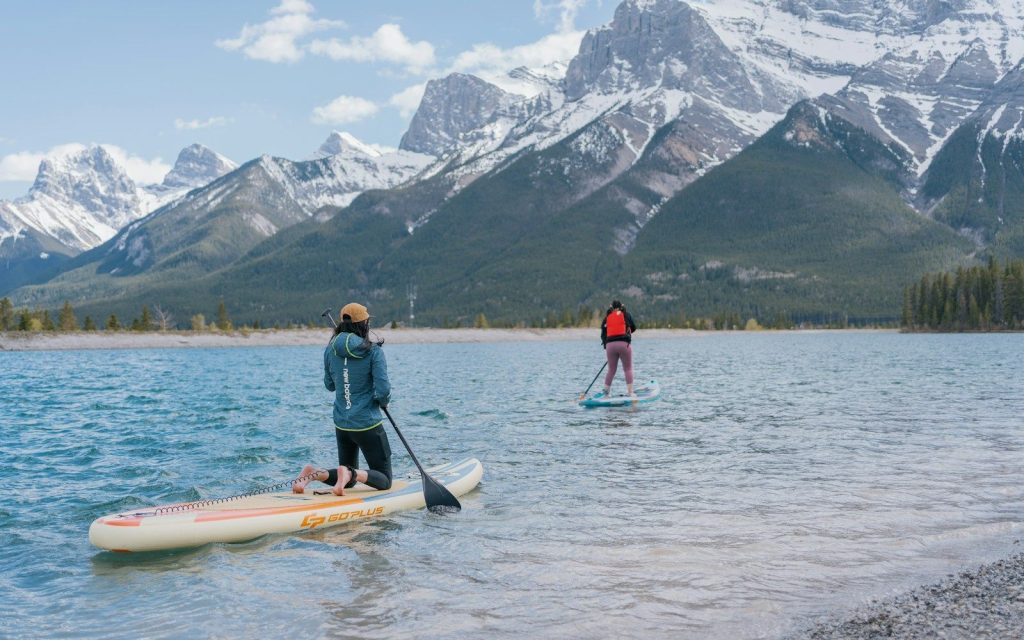
Paddling on a lake depends on the local rules: who sets them, where to read them, then the traps of water…
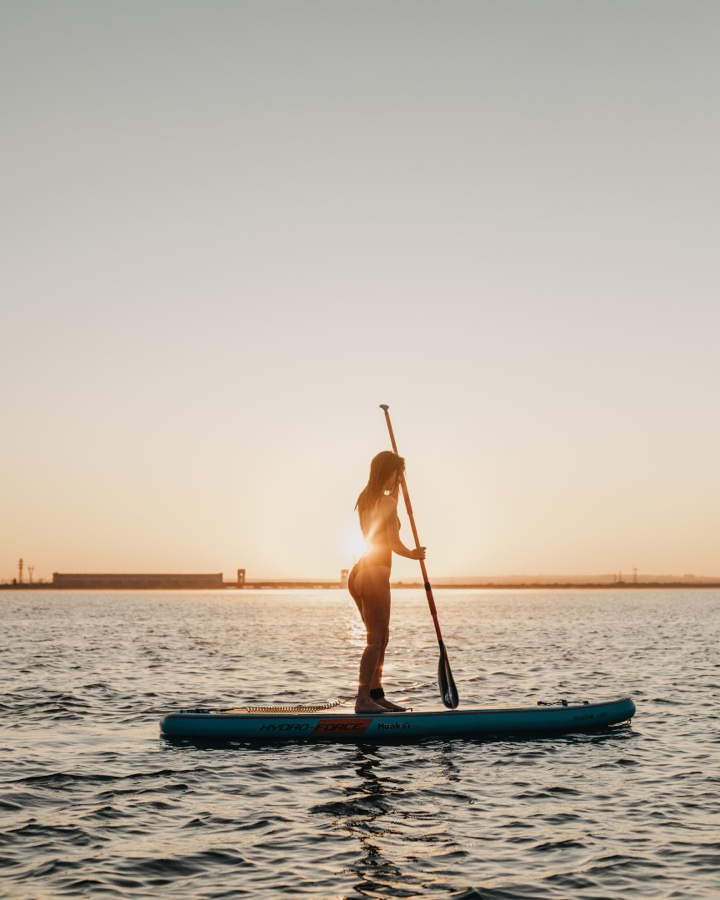
300-metre strip, life jacket, leash, yellow buoys, offshore wind: what the regulations really require for sea paddling,…
Estimate the revenue of a self-service rental station on your site, then request your free quote.
