Sports & spots
Paddling in Sète: the lido access by access, the lagoon, the canal rule
Where to paddle in Sète: the lido beaches access by access, the Thau lagoon and its closed zones, this…
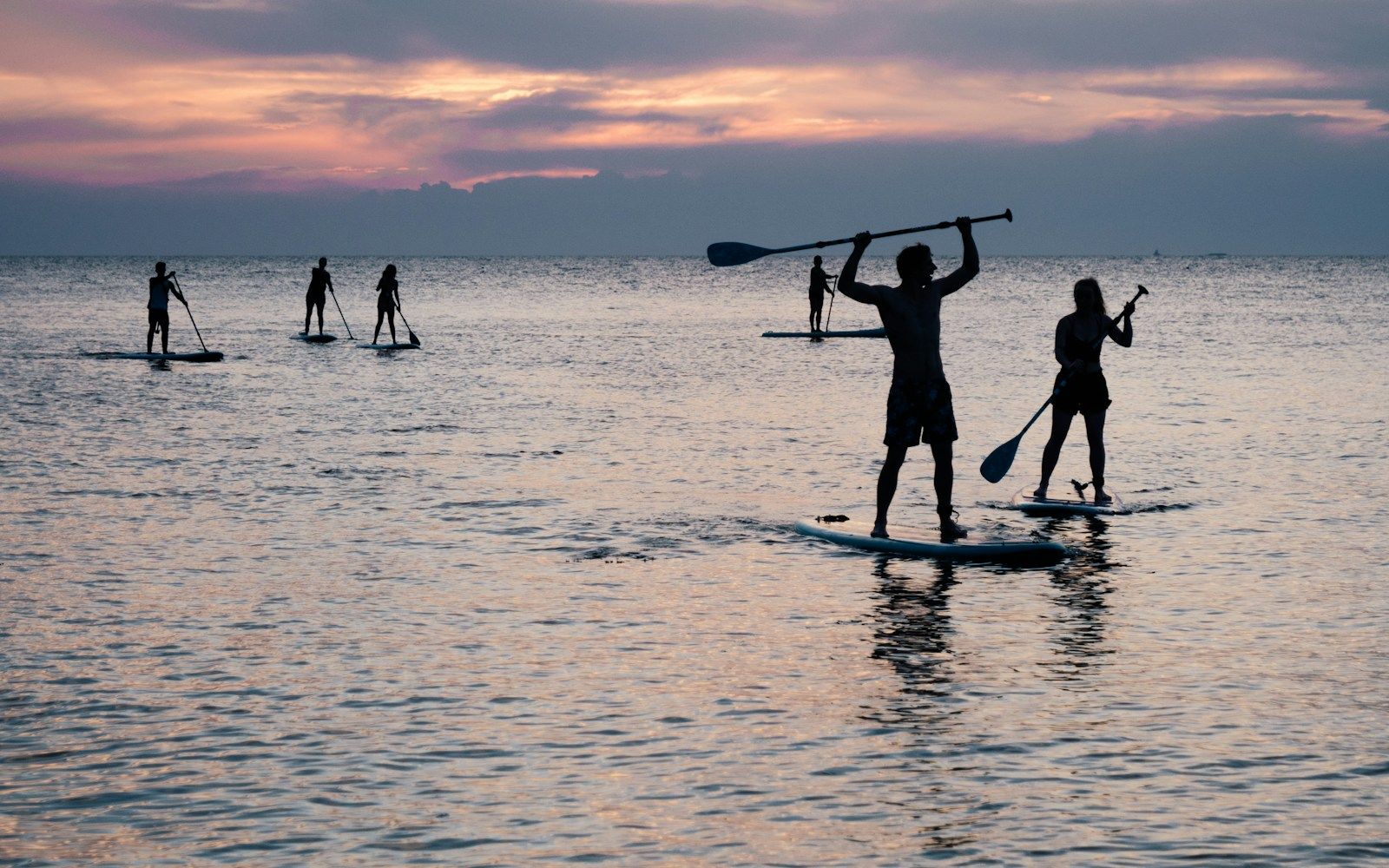
As a beginner, you can paddle at sea if you choose your day and your beach well: calm sea, wind not blowing from the land, a short outing near the shore, vest worn, never alone.
The law (300 metre strip, vest, leash) is covered in what the sea paddle regulations say; here, we talk about the moves.
Start from a supervised beach and ask where paddleboards can be launched: the SNSM (the sea rescuers) advises asking the rental operator, the harbour master's office or the lifeguard post. The Fédération française de surf (FFS), which holds delegated authority for stand up paddle, asks you to avoid bathing areas and prefer quiet spots.
A channel marked with yellow buoys sometimes lets you move away from the shore without going through the middle of swimmers. It may be assigned to other activities, such as kitesurfing or jet skis (DIRM Méditerranée): read its pictograms or ask the lifeguard post.
During the day, the land heats up more than the sea: warm air rises and cooler sea air comes in to replace it. According to Météo-France, this sea breeze generally starts in late morning or around midday and blows toward the land mostly in the afternoon, at 15 to 30 km/h on average, sometimes up to 50 km/h. The land breeze, weaker, blows out to sea mostly in the second half of the night.
In the morning, the water is therefore often calmer. But in the Mediterranean, as soon as the wind rises, the sea builds very quickly, warns the maritime prefecture. Go out in daylight, never alone, and tell a relative who can follow your outing and alert rescue services if worried, as advised by the ministry in charge of the sea. The FFS also asks you never to go out in stormy weather or strong wind.
Watch the sea for a few minutes: waves most often arrive in sets, separated by lulls. If they break without interruption, or if those breaking at the shore are enough to knock you off balance on foot, it is not a day to start.
Keep the nose facing the waves: caught sideways by a wave, the board may flip over. For standing up and where to look, see beginners' mistakes.
You set off against the wind and come back with it: on the way out you are fresh, on the way back the wind brings you home. Standing, your body acts as a sail, and every gust pushes you.
An offshore wind blows from the beach out to sea. Near the shore, it has not yet crossed enough water to raise waves: the sea looks flat. This is the trap the SNSM describes.
The clues: facing the sea, the wind at your back, flags stretched toward the water, a smooth sea at the shore and rippled further out. The ministry in charge of the sea asks you to beware of offshore wind and tidal currents that carry you away from the coast. It tells beginner windsurfers not to go out in offshore wind: on a paddleboard too, stay ashore. Where the tide is strong, also check its times before setting off. For strength and gusts, see how to read the wind and gusts before you leave.
Hérault Tourisme advises staying along the shore: pushed by the wind, you cover great distances in a short time. Pick a landmark on the beach, a flag or a building, as the ministry recommends: if it shifts while you paddle toward it, you are drifting.
The FFS asks that you be able to flip your board and climb back on it before practising at sea: train first where you can stand.
To get back on, position yourself at the side, level with the central handle, paddle across the board. With one hand on the handle and the other on the opposite edge, kick your legs to haul yourself up onto your stomach, then bring your knees under you. If the wind has strengthened during your fall, stay on your knees and head back.
First sign: you are paddling toward the beach and your landmark is no longer getting bigger. React straight away.
In rough seas, leisure floats are hard to spot, reminds the maritime prefecture: the ministry advises wearing bright colours.
Head back before you tire. At the shore, getting through the waves is done again in the other direction:
Before setting off, ask the rental operator or, if you rent self-service, the beach lifeguard post:
Six campsites in the Hérault are equipped with Wave-Up self-service rental stations, in La Grande-Motte, Marseillan-Plage, Agde, Vias and Vendres. Rental starts in front of the station: its QR code opens the booking page in the smartphone browser, with no app to install. You choose 1 h, 2 h, 4 h or 8 h, pay by card, and the locker opens with a code or QR code for the board, the paddle and the vest: put the vest on before going down to the water.
Each station is installed inside the grounds of its campsite: access conditions are those of the establishment; ask at its reception. Full details on how to rent a paddleboard in the Hérault. Do you run a campsite or a water sports centre by the sea? Discover the self-service paddleboard rental station and request a free quote.
Yes, on a calm sea, in light wind that does not blow from the land, near a supervised beach, vest worn and accompanied. The FFS asks that you can swim and are able to climb back onto your board. It invites you to learn in a certified school.
Wait for a lull and walk in on foot, the board beside you, nose facing the waves. Get on your knees when the fin no longer touches the bottom and paddle firmly past the breaking zone. If the waves breaking at the shore are enough to knock you off balance on foot, or if they break without interruption, postpone the outing.
Yes. The ministry in charge of the sea recommends attaching the leash at the ankle, and the FFS asks you to always use it up to 300 metres. Hérault Tourisme asks you to wear a leash and a lifejacket in all circumstances. What the law requires depending on the board and the distance is detailed in the article on regulations.
In the morning, most often: according to Météo-France, the sea breeze starts in late morning or around midday and blows mostly in the afternoon. At dawn, a remnant of land breeze can however carry you out to sea, and a stronger wind can dominate the day: the forecast settles it.
A supervised beach, a morning without offshore wind, the vest worn, a relative informed and a turn back as soon as your landmark stops getting bigger: with these habits, ease comes outing after outing.

Where to paddle in Sète: the lido beaches access by access, the Thau lagoon and its closed zones, this…
Paddleboarding works the abs and back first, then the triceps and shoulders. For 70 kg, expect 200 to 270 kcal per hour…
Night paddle boarding is banned at sea and limited to daytime on the Canal du Midi. The landmark: sunset…
Estimate the revenue of a self-service rental station on your site, then request your free quote.
